Introduction
For Nigerian homes and businesses, choosing between lithium batteries and traditional lead-acid batteries directly impacts monthly expenses, reliability, and long-term value. With grid instability and record-high fuel prices, the right choice for backup power in Nigeria can save millions of Naira over time.
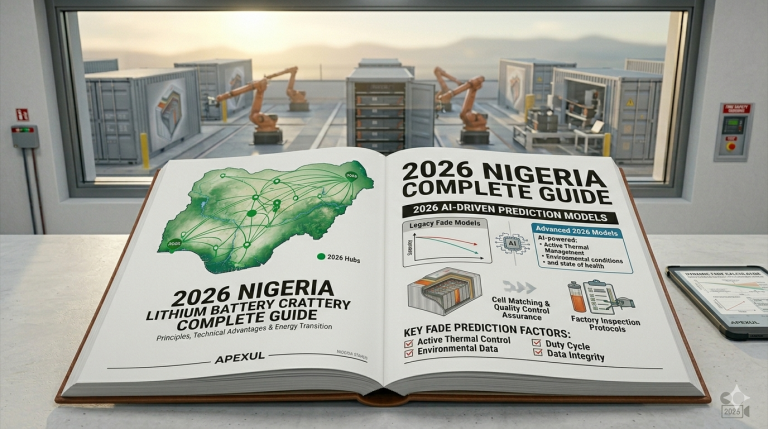
This head-to-head comparison focuses on what matters most in Nigeria: cost, lifespan, heat resistance, charging speed, and daily practicality for lithium battery Nigeria and solar storage battery Lagos setups. For a complete overview of lithium battery benefits, read our pillar guide: 2026 Nigeria Lithium Battery Complete Guide.
Key Comparison: Lithium vs. Lead-Acid (Tailored for Nigeria)
1. Total Cost of Ownership (TCO)
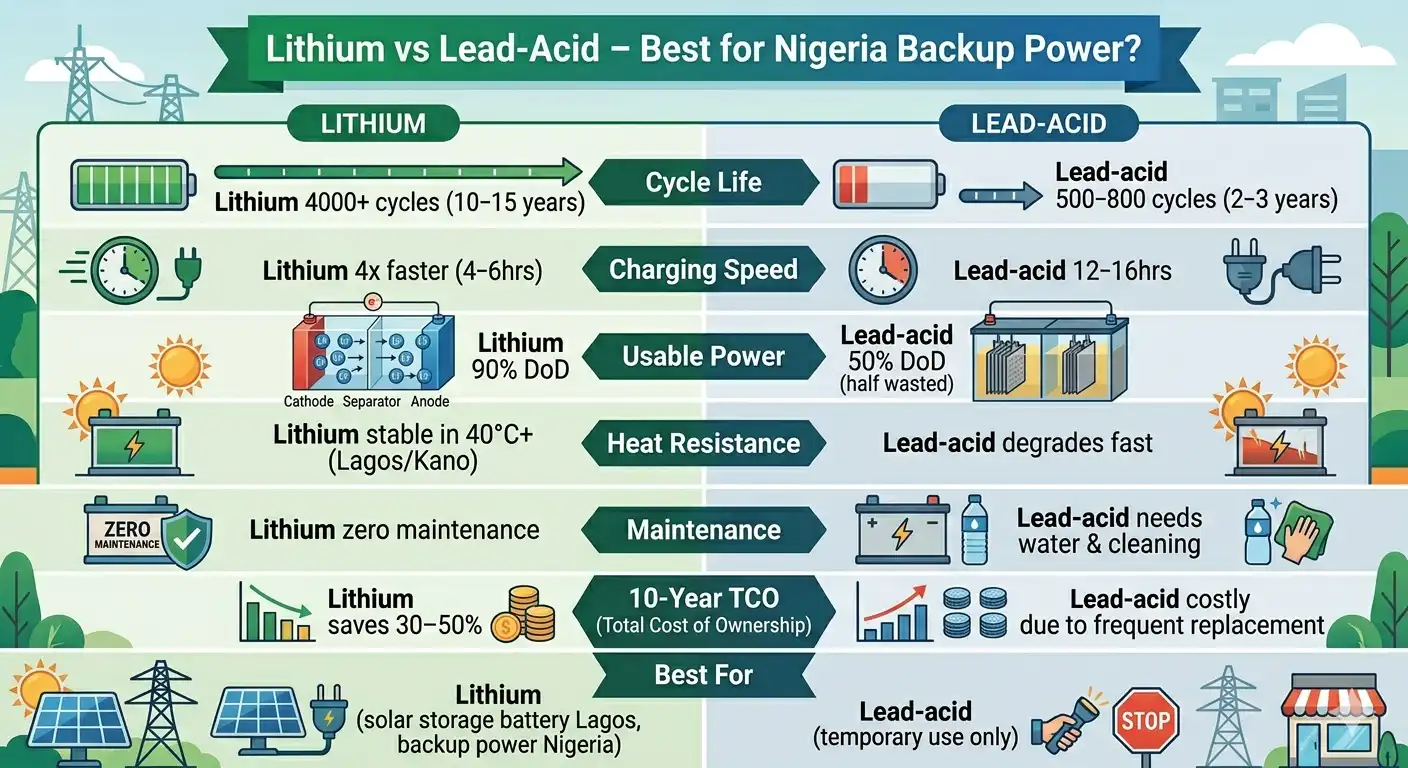
- Lead-acid: Low upfront cost, but only 500–800 cycles (2–3 years lifespan in Nigeria’s heat). Must be replaced 4–5 times in 10 years, increasing long-term costs for backup power in Nigeria.
- Lithium (LiFePO4): Higher upfront investment, but 4000+ cycles (10–15 years lifespan). Perfect for lithium battery Nigeria setups seeking long-term value.
- TCO Verdict: Lithium saves 30–50% over 10 years, with zero maintenance costs—critical for Nigerian SMEs and homeowners.
2. Charging Speed (Critical for Nigeria’s Grid)
- Lead-acid: 12–16 hours for a full charge—too slow for Nigeria’s short, unpredictable grid windows.
- Lithium: 4–6 hours (4x faster). Faster charging means you store more power for outages, ideal for solar storage battery Lagos and backup power in Nigeria.
3. Usable Capacity: Depth of Discharge (DoD)
- Lead-acid: Safe only to 50% DoD—half capacity wasted, leaving you without power during long Nigerian outages.
- Lithium: Safe to 90% DoD (nearly full usable power). A 5kWh lithium battery system delivers as much usable power as a 10kWh lead-acid setup—perfect for solar storage battery Lagos.
4. Heat & Climate Resistance (Nigeria-Specific)
- Lead-acid: Degrades rapidly above 35°C; shortens lifespan by 50% in Lagos/Kano heat—unreliable for the lithium battery Nigeria needs.
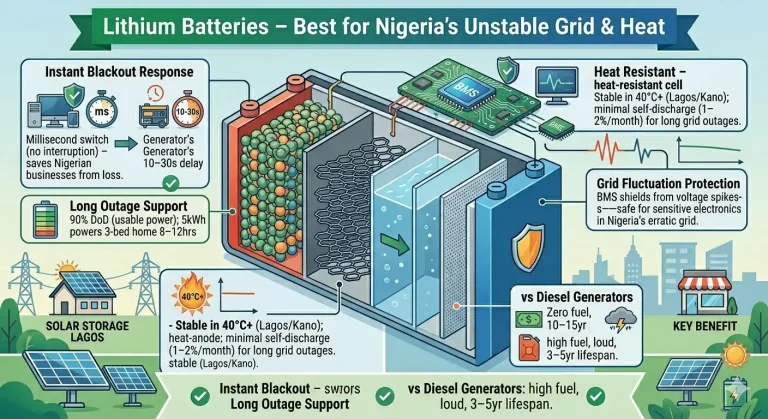
- LiFePO4 Lithium: Stable from -20°C to 60°C; no performance loss in extreme heat—ideal for solar storage battery Lagos and outdoor installations.
5. Size & Weight
- Lead-acid: Bulky, heavy, hard to install in small apartments—impractical for urban Lagos homes and small SMEs needing backup power in Nigeria.
- Lithium: 50–70% lighter, compact, ideal for urban homes, offices, and solar storage battery Lagos setups with limited space.
6. Maintenance
- Lead-acid: Requires monthly water top-ups, terminal cleaning, and ventilation—time-consuming and costly for Nigerian users.
- Lithium: Fully maintenance-free, sealed, no acid leakage risks—perfect for busy Nigerian homeowners and SMEs using lithium batteries in Nigeria.
Real-World Value for Nigeria
- A Lagos home using lithium cuts battery replacement costs by 70%+ compared to lead-acid, making a lithium battery in Nigeria a smart investment.
- SMEs reduce generator runtime and fuel spending (critical post-fuel subsidy removal) with reliable backup power in Nigeria from lithium batteries.
- Solar storage battery Lagos systems perform better with lithium’s faster charging and deeper discharge, maximizing free solar energy.
Which Should You Choose?
- Choose lead-acid only for short-term, low-budget temporary use—never for long-term lithium battery in Nigeria or solar storage needs.
- Choose lithium (LiFePO4) for long-term reliability, lower TCO, and Nigeria’s heat and grid challenges—ideal for backup power in Nigeria and solar storage battery in Lagos.
Conclusion
Lithium batteries outperform lead-acid in every category critical to Nigeria. Higher upfront cost is offset by longer life, less maintenance, and far more usable power—making them the top choice for lithium battery Nigeria and backup power Nigeria.
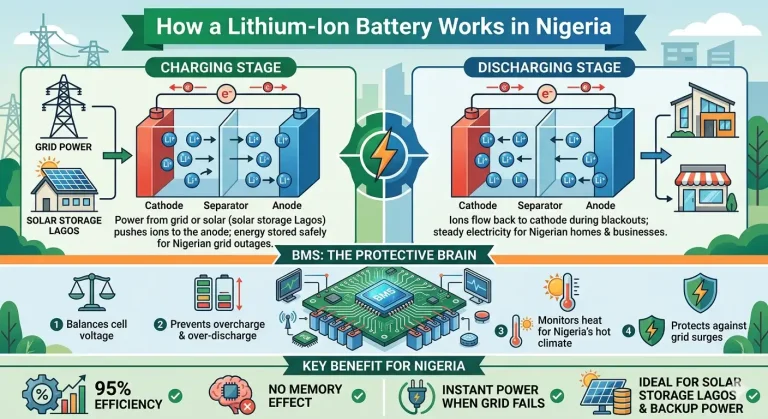
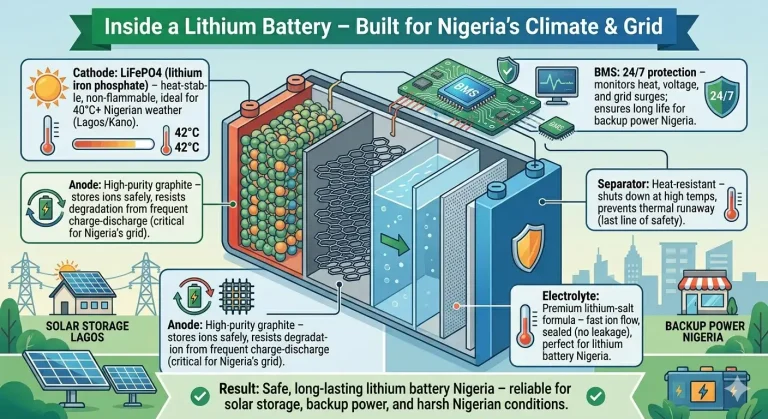
For detailed insights on LiFePO4 technology and BMS protection, visit our pillar page: 2026 Nigeria Lithium Battery Complete Guide.
 Byeditor