Introduction
A lithium battery’s lifespan, safety, and performance in Nigeria do not come from branding – they come from high-quality internal components. Cheap materials lead to overheating, short lifespans, and even safety risks, which is why component quality is critical for lithium battery setups in Nigeria.
In this article, we break down the four core parts of a lithium battery and explain why each one matters for Lagos, Kano, Port Harcourt, and all Nigerian environments. For a full overview of lithium battery technology, visit our main guide: 2026 Nigeria Lithium Battery Complete Guide.
The Four Core Components of a Lithium Battery (Nigeria-Focused)
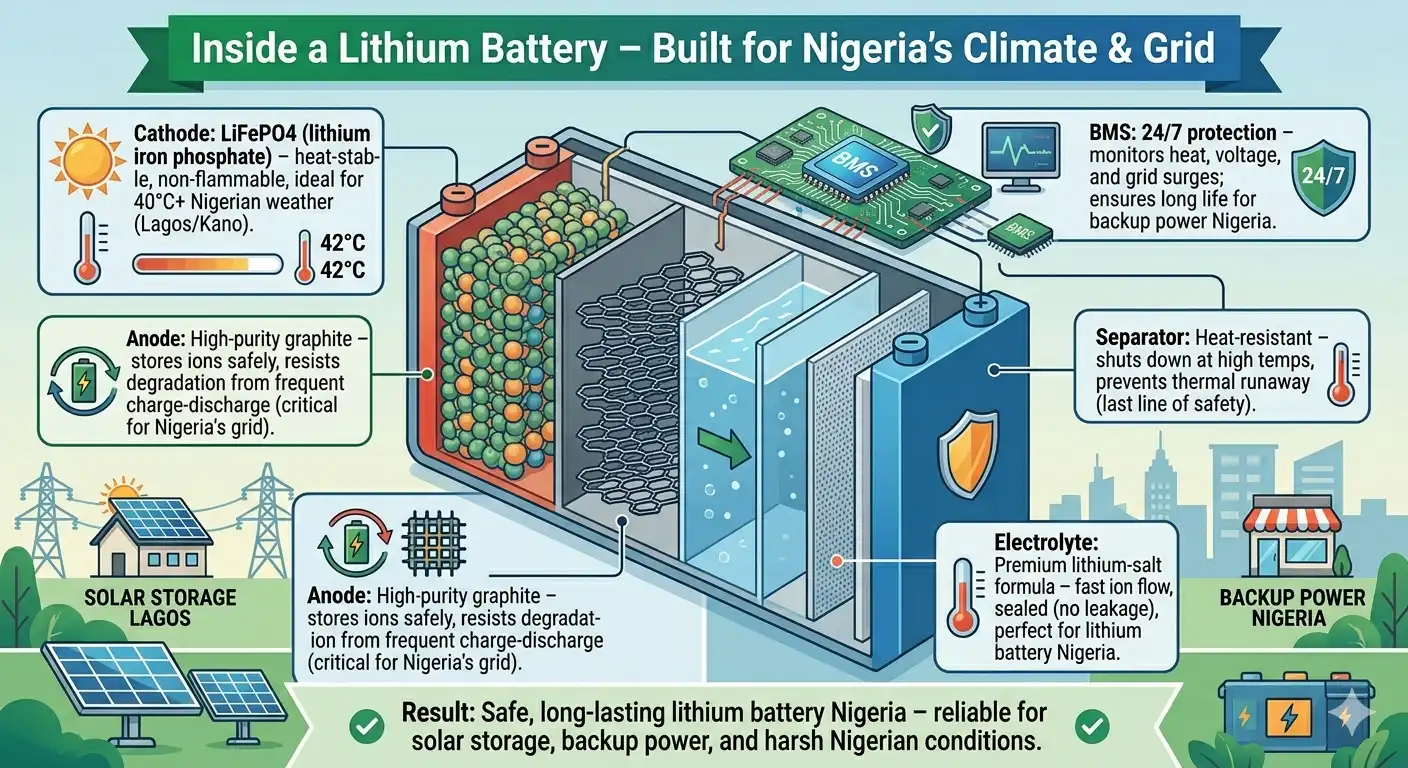
The cathode defines voltage, capacity, and safety, critical for lithium batteries in Nigeria’s harsh climate.
- LiFePO4 (Lithium Iron Phosphate): Best for Nigeria’s high temperatures; excellent thermal stability; non-flammable; long cycle life (4000+ cycles) – the top choice for lithium battery in Nigeria.
- NMC and LiCoO2: Less stable in heat; not ideal for solar storage or backup power in Nigeria, as they risk thermal runaway in 40°C+ weather.
Why it matters: LiFePO4 cathode prevents overheating and fire risks in 40°C+ Nigerian weather, making it essential for lithium battery use in Nigeria and outdoor solar setups.
2. Anode (Negative Electrode) – Stable Energy Storage
Most high-quality lithium batteries use graphite for the anode—perfect for lithium battery Nigeria’s frequent charge-discharge cycles.
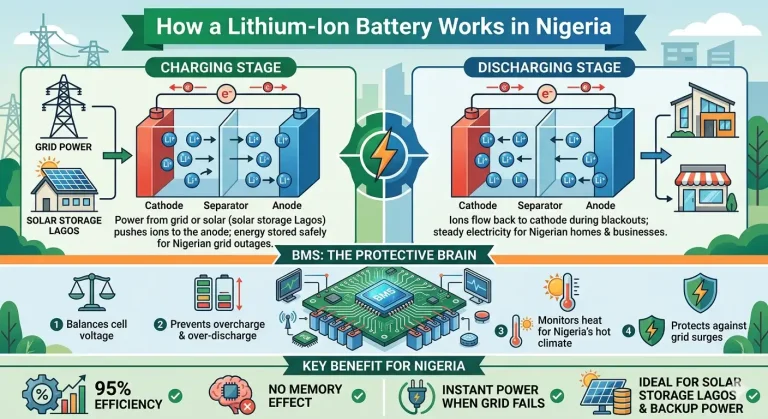
- Absorbs lithium ions during charging (from grid or solar panels).
- Releases them smoothly during outages, ensuring steady power for Nigerian homes and businesses.
- High-purity graphite reduces degradation over time, extending the life of your lithium battery in Nigeria.
3. Electrolyte – The Ion Highway
The electrolyte acts as a highway for lithium ions, enabling efficient energy transfer—key for solar storage and backup power in Nigeria.
- Premium lithium-salt formula enables fast, efficient movement, supporting lithium battery Nigeria’s fast charging needs.
- Low-quality electrolyte causes slow charging, excess heat, and shortened life—avoid this for Nigerian setups.
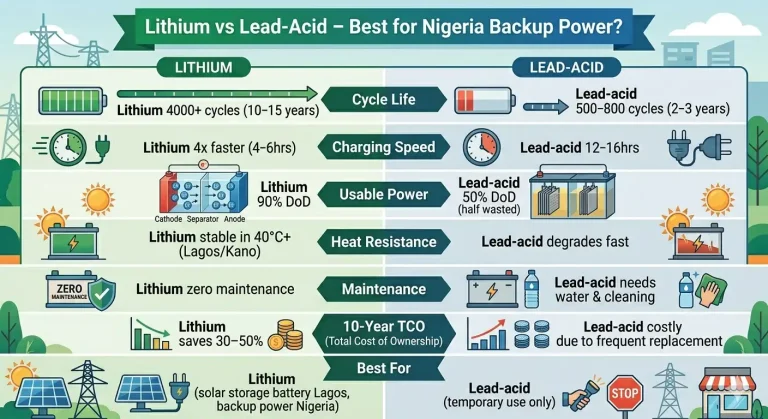
- Sealed, non-acidic design eliminates leakage risks—safer than lead-acid for homes and SMEs using lithium batteries in Nigeria.
4. Separator – The Last Line of Safety
The separator is the most critical safety component for lithium batteries in Nigeria, protecting against thermal runaway.
- High-grade separator: Thin porous membrane between cathode and anode; shuts down at high heat to stop ion flow and prevent thermal runaway—essential for Nigeria’s hot climate.
- Cheap separator: Melts or tears, creating internal shorts and safety hazards—never choose this for a lithium battery in Nigeria.
The separator is the last line of defense against fire in Nigeria’s extreme heat, making it non-negotiable for reliable lithium battery setups in Nigeria.
Additional Critical Components (Nigeria-Specific)
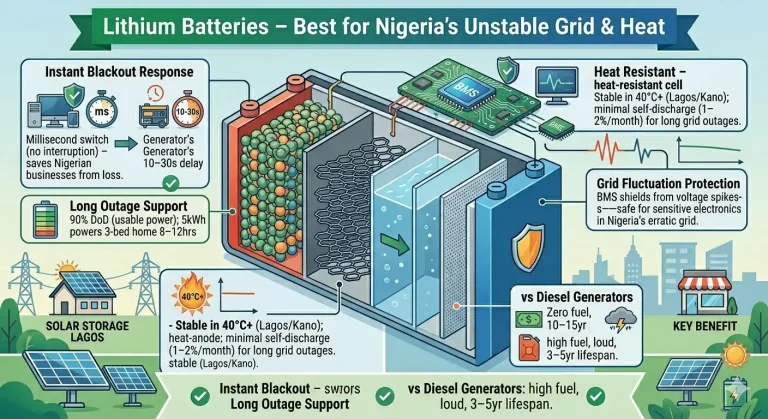
- BMS (Battery Management System): Monitors voltage, temperature, and current in real time—protects against grid surges and heat for lithium battery in Nigeria.
- Rugged Casing: Protects against dust, humidity, and physical damage—ideal for Nigeria’s harsh operating conditions (e.g., dusty Lagos or humid Port Harcourt).
- Current Collectors: Aluminum (cathode) and copper (anode) for efficient energy transfer, ensuring your lithium battery in Nigeria delivers consistent power.
How Quality Components Prevent Thermal Runaway (Critical for Nigeria)
Thermal runaway is the biggest safety concern with batteries. Quality design stops it for the lithium battery in Nigeria:
- LiFePO4 cathode does not release oxygen at high temperatures, reducing fire risk.
- Heat-resistant separator stops ion flow when too hot, preventing thermal runaway.
- BMS cuts power before dangerous temperatures are reached, protecting your lithium battery in Nigeria.
Why Component Quality Matters in Nigeria
- Grid fluctuations demand strong, stable performance from your lithium battery Nigeria components.
- High heat accelerates the failure of low-grade parts, costing you more in replacements for backup power in Nigeria.
- Solar storage needs year-round reliability, which only quality components can deliver for solar storage battery Lagos.
Conclusion
Every internal component shapes safety, lifespan, and value. For Nigeria’s climate and unstable grid, LiFePO4 chemistry + high-grade separator + intelligent BMS is the only reliable combination for lithium battery in Nigeria.
To understand how these components work together in real-world solar and backup systems, return to our pillar page: 2026 Nigeria Lithium Battery Complete Guide.

 Byeditor