Address
Future Science Park, Nanhu, Hangzhou
Open Hours
Workday: 7AM - 7PM
Holiday: 10AM - 5PM
Address
Future Science Park, Nanhu, Hangzhou
Open Hours
Workday: 7AM - 7PM
Holiday: 10AM - 5PM

Understand how lithium-ion batteries work for Nigeria’s solar storage & backup power. Simple explanation of redox reactions, charge cycles, and the critical role of BMS in Lagos & Nigeria.
 Byeditor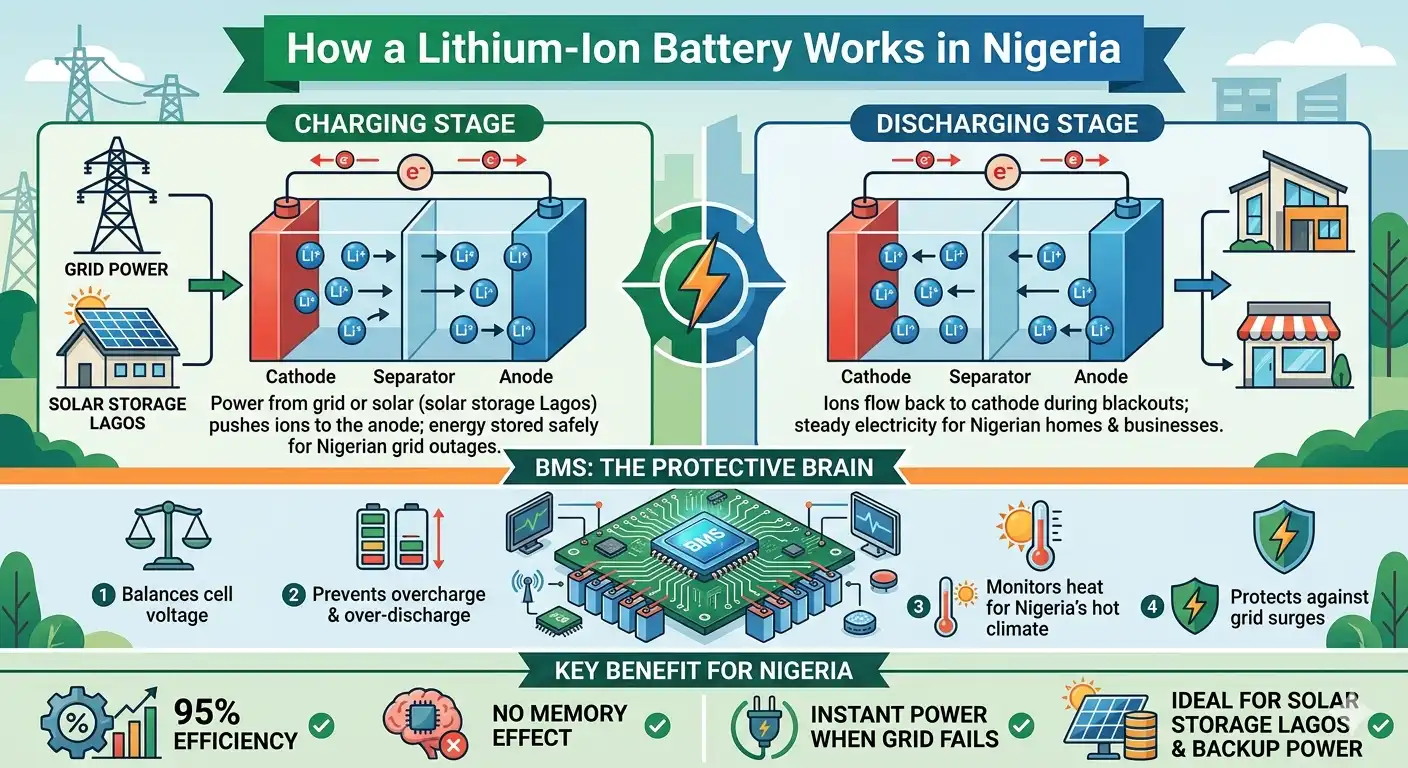
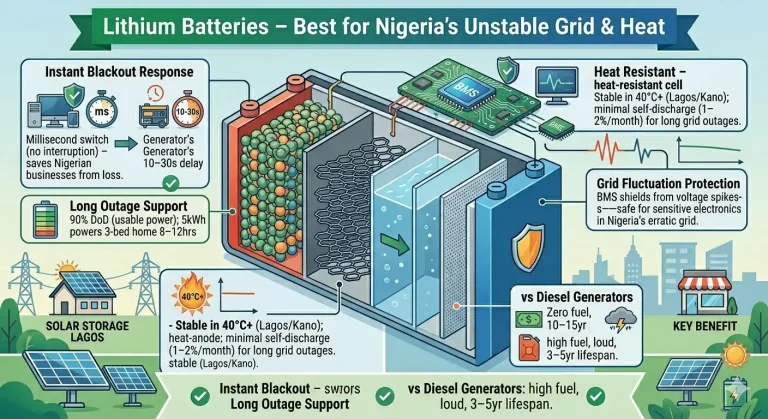
Across Nigeria, frequent grid outages, rising fuel costs, and growing solar adoption have made lithium-ion batteries the most important component of reliable home and business power systems. To choose a safe, long-lasting lithium battery in Nigeria, you need to understand how it actually stores and delivers energy.
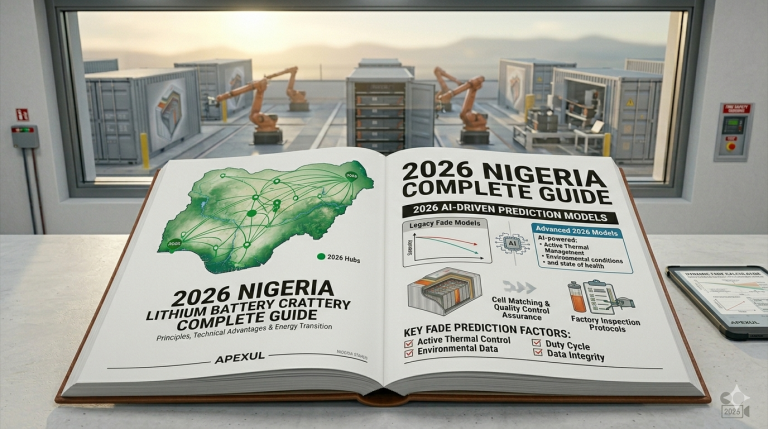
This article breaks down the chemistry, charge-discharge cycle, and the non-negotiable role of the BMS (Battery Management System) for Nigeria’s harsh climate and unstable grid. For a complete overview of lithium battery benefits tailored to Nigeria, explore our pillar guide: 2026 Nigeria Lithium Battery Complete Guide.
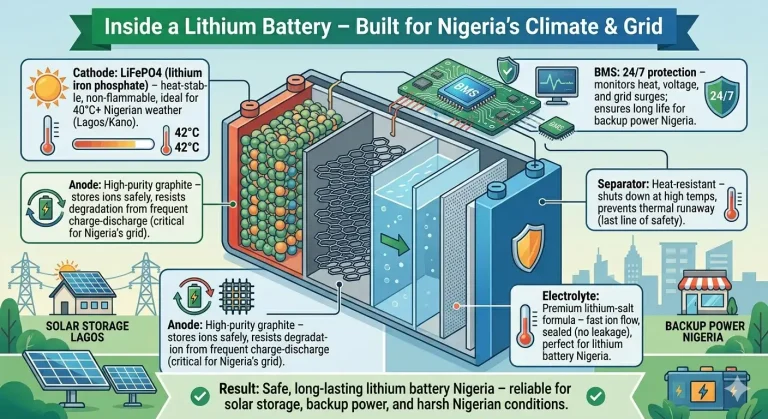
Lithium-ion batteries produce electricity through controlled oxidation-reduction (redox) reactions—no advanced engineering degree is required to understand the process, even for Nigerian users new to solar storage in Lagos.
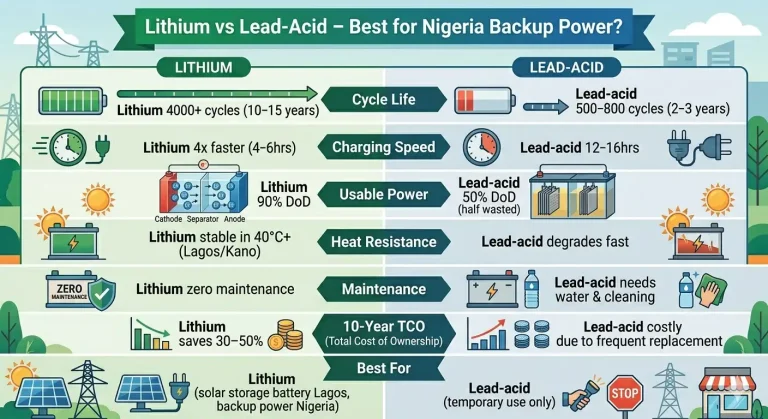
This cycle is highly efficient, reaching 95% energy conversion—far better than the 70–80% efficiency of traditional lead-acid batteries, making it ideal for lithium battery setups in Nigeria.
To make the process easy to visualize for Nigerian homes and businesses, we use a simple comparison:
Unlike lead-acid batteries, lithium-ion systems have no memory effect—you can charge at any time without reducing total capacity, a major advantage for Nigeria’s unpredictable grid.
BMS (Battery Management System) is the most critical component for Nigeria’s unstable grid. It protects performance and safety 24/7, making it a non-negotiable feature for any lithium battery setup in Nigeria.
Without a quality BMS, even premium LiFePO4 batteries (the best for lithium batteries in Nigeria) degrade fast or become unsafe in Nigeria’s climate.
Lithium-ion batteries work through controlled ion movement, with the BMS ensuring safety, stability, and long life. For homes, SMEs, and industrial operations across Nigeria, this technology provides the reliable backup power the national grid cannot deliver—making it the top choice for lithium battery Nigeria and solar storage Lagos.
For more on LiFePO4 advantages, total cost comparison, and other key details, continue to our next cluster articles or return to the full pillar guide: 2026 Nigeria Lithium Battery Complete Guide.