Are Lithium Batteries Best for Nigeria? Unstable Grid Performance
Lithium batteries vs generators & lead-acid in Nigeria’s unstable grid. Instant response, low noise, lower fuel cost, high reliability for Lagos homes & businesses.
Nigeria’s national grid suffers repeated collapses, leaving homes and businesses without power for hours. Diesel generators are noisy, costly, and high-maintenance. Lithium batteries have emerged as the most reliable solution for backup power reliability in Nigeria and solar storage performance.
We analyze real-world performance under Nigeria’s extreme energy conditions, focusing on why the lithium battery for an unstable grid in Nigeria is the top choice. For full benefits and buying guidance, read: 2026 Nigeria Lithium Battery Complete Guide.
Table of Contents
Lithium Battery Performance in Nigeria’s Unstable Grid
1. Instant Response to Blackouts (Critical for Nigeria)
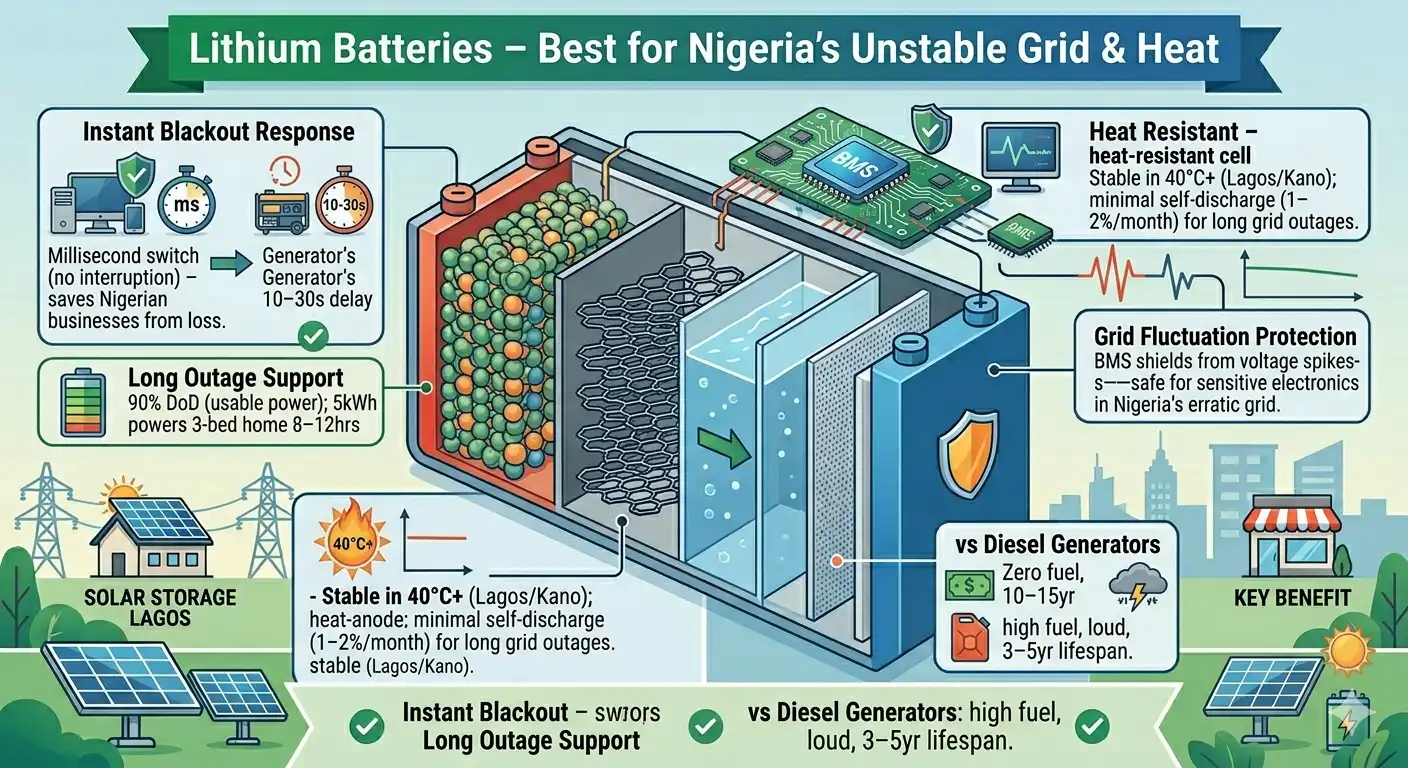
Lithium: Millisecond-level switch to backup power; no interruption for fridges, POS, or machinery—saves Nigerian businesses from revenue loss.
Generator: 10–30 second startup delay; disrupts operations and risks data loss—unreliable for backup power reliability in Nigeria.
Lead-acid: Slow response and voltage drops under load—fails to deliver when you need it most for a lithium battery in Nigeria.
2. Sustained Power During Long Outages
LiFePO4: 90% DoD delivers maximum usable capacity—key for lithium battery for unstable grid in Nigeria.
A 5kWh lithium system powers a 3-bedroom home for 8–12 hours—enough to survive extended grid collapses in Lagos/Kano.
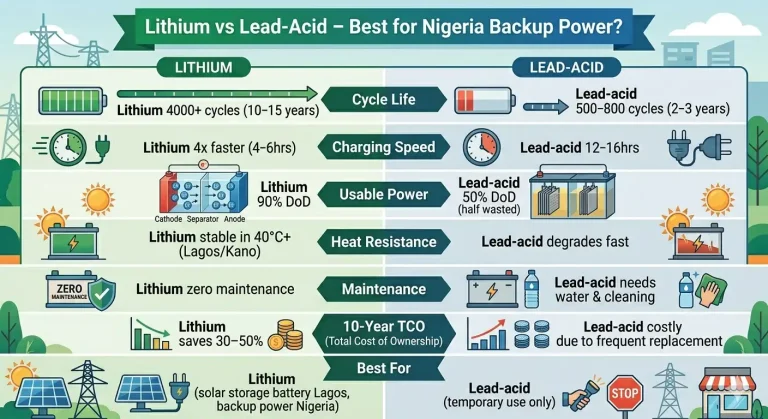
Lead-acid only uses 50% capacity, lasting half as long—leaving you in the dark during long Nigerian outages.
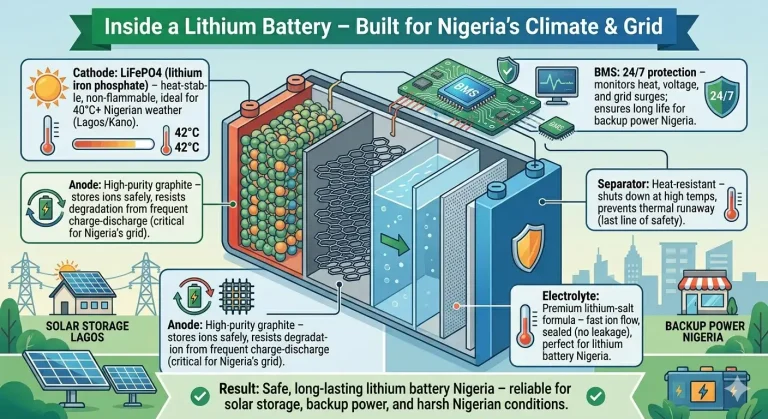
Operates reliably at 40°C+ in Lagos and Kano—no performance loss in Nigeria’s extreme heat, ideal for lithium battery in Nigeria.
Minimal self-discharge (1–2% per month) vs 5–10% for lead-acid—retains charge during long grid outages for backup power reliability in Nigeria.
No acid leakage or corrosion in hot, humid environments—safer than lead-acid for homes and SMEs using solar storage performance setups.
4. Stability Against Grid Fluctuations
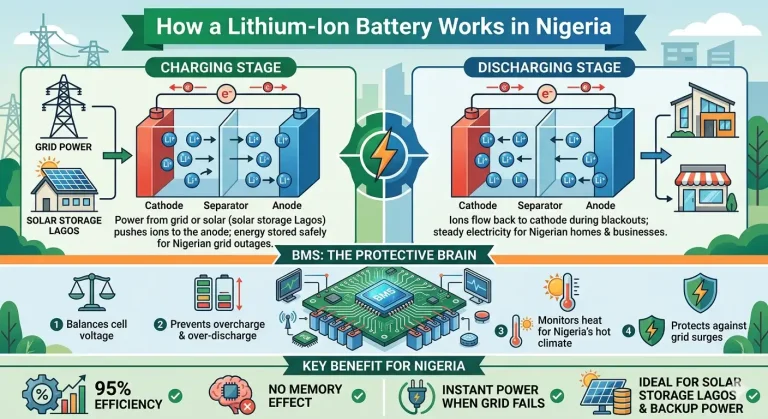
BMS protects against voltage spikes and surges from the unstable grid—critical for lithium battery in Nigeria.
Consistent output protects sensitive electronics and appliances—prevents damage from Nigeria’s erratic grid power.
Lithium Batteries vs. Diesel Generators (Nigeria Cost & Performance)
Aspect
Lithium Batteries (Lithium Battery Nigeria)
Diesel Generators
Fuel Cost
Zero (solar/grid-charged)
Extremely high post-subsidy
Maintenance
Zero
Regular oil, filters, repairs
Noise & Fumes
Silent, clean
Loud, toxic fumes
Lifespan
10–15 years
3–5 years
Startup Speed
Instant
Delayed
Lithium vs. Lead-Acid in Grid Failures (Nigeria-Specific)
Lithium handles frequent charge-discharge cycles without degradation—perfect for a lithium battery for an unstable grid in Nigeria.
Lead-acid fails quickly with daily deep cycling—costly to replace for backup power reliability in Nigeria.
Lithium supports solar self-consumption to reduce grid reliance—maximizing solar storage performance for Nigerian users.
Real Benefits for Nigerian Users
Homeowners: Silent backup, no fuel bills, safe for families—ideal lithium battery Nigeria setup.
SMEs: Avoid revenue loss from outages, lower operational costs—critical post-fuel subsidy removal for backup power reliability in Nigeria.
Industrial Sites: Stable power for machinery, reduced generator use—maximizing solar storage performance and cutting costs.
Are Lithium Batteries the Best Choice?
Yes—for Nigeria’s unstable grid, high fuel prices, and hot climate.
Lower long-term cost than generators and lead-acid—smart investment for lithium battery in Nigeria.
Safer, quieter, and more reliable—perfect for backup power reliability in Nigeria.
Paired with solar, achieves near energy independence—maximizing solar storage performance for Nigerian users.
Conclusion
Lithium batteries outperform all alternatives in Nigeria’s challenging energy landscape. Instant response, heat tolerance, and low operating costs make them essential for reliable backup power—solidifying their role as the best lithium battery for an unstable grid in Nigeria.

 Byeditor