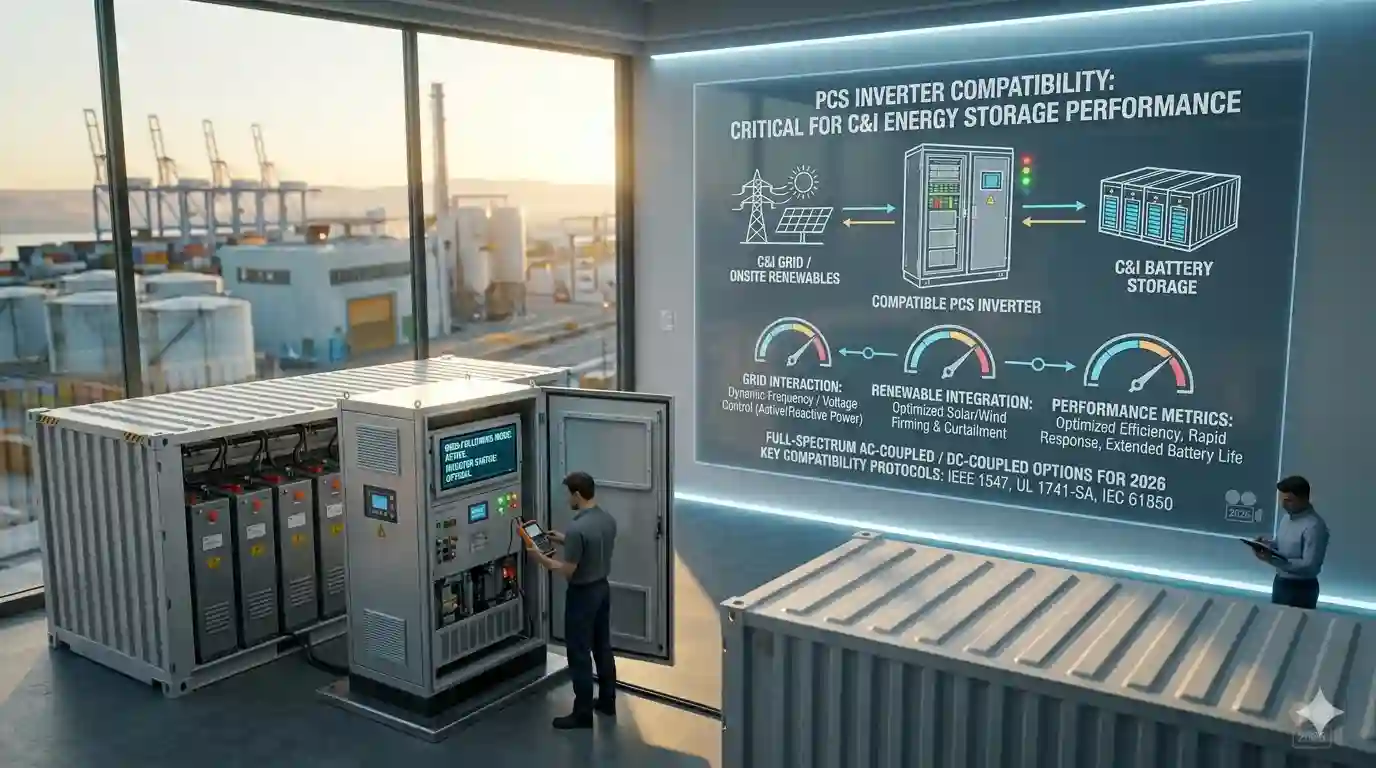
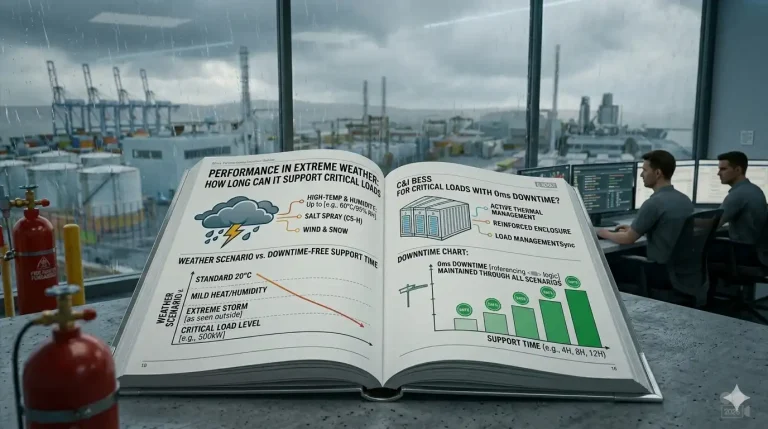
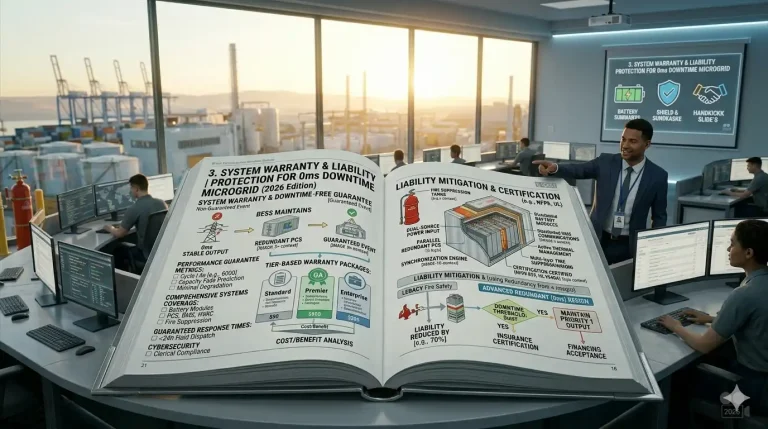
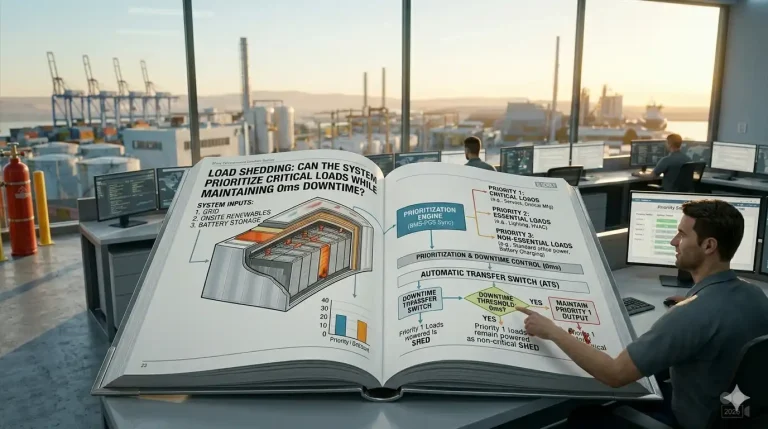
PCS (Power Conversion System) compatibility is the “digital backbone” of reliable C&I energy storage. Even high-quality batteries and inverters will fail to perform if they suffer from protocol mismatches, voltage range misalignment, or communication failures. Incompatibility causes performance losses, premature battery degradation, safety risks, and project delays. This guide covers key compatibility risks, standards, and solutions. For full procurement insights, refer to our complete guide:
The Ultimate Guide to Avoiding Pitfalls in Commercial & Industrial Energy Storage Procurement: 15 Critical Questions & Solutions (2026 Edition).
Critical Compatibility Pitfalls
- Protocol Mismatch (Most Common): Incompatible BMS-PCS communication (e.g., Modbus RTU vs. TCP/IP, CAN 2.0A vs. 2.0B, or proprietary vendor protocols) creates “language barriers,” stopping data exchange and system operation.
- Voltage/Current Range Misalignment: PCS input voltage window doesn’t match battery’s charge/discharge voltage profile, leading to reduced capacity, inefficient charging, or BMS protection triggers.
- Dynamic Response Incompatibility: PCS control speed too slow for battery’s charge/discharge dynamics, causing overvoltage/undervoltage and cell damage.
- Grid Code Non-Compliance: PCS fails to meet local grid codes (voltage/frequency ride-through, power factor), leading to utility rejection or unstable grid connection.
Core PCS Compatibility Requirements
- Communication Protocol Compatibility
- Support for standard protocols: CAN 2.0B, Modbus TCP/RTU, IEC 61850, Sunspec.
- Open protocols are preferred over vendor-locked proprietary systems for future flexibility.
- Real-time BMS-PCS handshake (≤10ms latency) for precise voltage/current control.
- Electrical Parameter Matching
- PCS voltage range fully covers the battery’s SOC window (20–100%).
- Charge/discharge current ratings match the battery’s maximum pulse & continuous rates.
- Isolation design & grounding schemes aligned to prevent ground loops.
- Control & Dynamic Performance
- PCS response time ≤ 20ms for load/grid fluctuations.
- Seamless transition between charging/discharging modes.
- Grid-forming capability for off-gridOff-grid solar is a standalone photovoltaic system that operates independently o/backup applications.
APEX Solution: Fully Validated PCS-Battery Integration
- Pre-Validated Compatibility Pairs: APEX systems use rigorously tested battery-PCS combinations (proven over 1,000+ hours) to eliminate protocol/voltage risks.
- Multi-Protocol Controller: Our proprietary gateway translates 12+ protocols, ensuring interoperability with all major PCS brands (Sungrow, SMA, Huawei, etc.).
- Grid-Code Compliance: All PCS units pre-certified for IEC 61727, IEEE 1547, and local grid standards (CE, UL, VDE).
- Dynamic Tuning: On-site commissioning optimizes PCS control parameters for your battery chemistry (LFP/NMC) for maximum efficiency & lifespan.
Procurement Checklist: PCS Compatibility
- Verify BMS-PCS protocol support (request official compatibility matrices).
- Confirm the PCS voltage window matches the battery’s full operating range.
- Check PCS response time & grid-code certifications.
- Request third-party integration test reports (not just component specs).
- For technical standards:
Why PCS-BMS Protocol Matching Is Critical for Storage Safety
and
IEC & GB Standards for PCS-Battery Compatibility Testing.

 Byeditor