How Long Can a Diesel Generator Run Continuously? A Guide for Commercial & Industrial Users

Modern industrial diesel generators can run non-stop for days or weeks, but actual runtime depends on four key factors.

If you rely on a diesel generator for backup power or off-grid operations, a critical question often arises: “How long can it run non-stop?” The short answer is: modern industrial diesel generators are engineered for continuous, 24/7 operation, often for days or even weeks. However, the practical runtime before needing service is heavily dependent on four key factors.

The Four Pillars of Continuous Runtime

  1. Fuel Supply: This is the most obvious limit. Runtime = Fuel Tank Capacity ÷ Fuel Consumption at load. Large, refillable external tanks are essential for long-term use.
  2. Engine Maintenance & Design: Industrial “continuous duty” or “prime power” rated generators are built with reinforced components (e.g., cylinder liners, bearings) for sustained operation, unlike lighter “standby” units. Adherence to a strict maintenance schedule for oil, filters, and coolant is non-negotiable.
  3. Load Factor: Consistently operating at 70-80% of its rated capacity is ideal for longevity. Chronic under-loading (“wet stacking”) or persistent overloading dramatically increases wear and reduces engine life.
  4. Cooling System Effectiveness: Continuous operation generates immense heat. A well-sized and maintained cooling system (radiator, coolant) is vital to prevent catastrophic overheating.

The Hidden Costs of “Run-It-Forever” Mode

Even with perfect conditions, using a diesel generator as a primary, continuous power source comes with significant challenges:

  • Soaring Operational Costs: Fuel consumption is constant, leading to enormous and unpredictable energy bills.
  • Accelerated Wear & Maintenance: Parts degrade faster, increasing the frequency and cost of major overhauls.
  • Carbon Emissions & Noise: Continuous running amplifies environmental impact and noise pollution concerns, conflicting with ESG goals.
  • Single Point of Failure: Your entire power supply depends on one machine and one fuel supply chain.

A Smarter Path: The Hybrid “Solar-Storage-Generator” Microgrid Solution

For businesses looking to secure reliable, long-term power while dramatically reducing costs and risk, the optimal strategy is not to run a generator alone, but to integrate it intelligently.

This is where a modern “光储柴” (Solar + Storage + Diesel) hybrid microgrid transforms your energy profile:

  • Generator as the Backup, Not the Workhorse: Solar PV panels become the primary daytime power source. The battery storage system manages loads, shaves peak demand, and ensures seamless transitions. The diesel generator only activates when strictly needed, slashing runtime from thousands of hours to merely hundreds.
  • Achieve “Continuous Power” with Strategic Generator Use: The system ensures 24/7 power availability, but the generator’s actual run time is minimized, extending its life by years and cutting fuel costs by 70% or more.
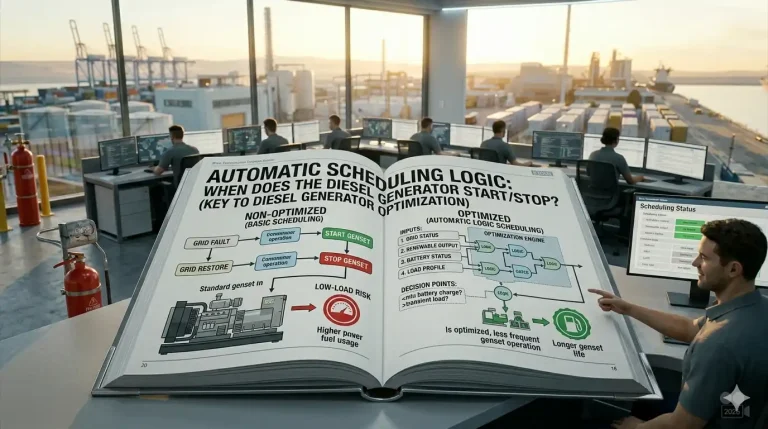
  • Automated, Optimized Control: An intelligent controller manages the entire system, deciding the most economical and efficient moment to start or stop the generator, ensuring it always runs at an optimal load.

Conclusion: It’s About the Right System, Not Just a Generator

So, how long can a diesel generator run? Technically, a well-maintained industrial unit can operate for weeks. The more pertinent question for a cost-conscious, forward-thinking business is: “How can I achieve continuous, reliable power while minimizing my generator’s runtime and total cost of ownership?”

As a specialist in industrial and commercial energy solutions, we help businesses design and implement optimized 光储柴 hybrid systems. We move beyond simply supplying equipment to providing a strategic energy partnership—ensuring your operations are resilient, your costs are predictable, and your energy infrastructure is built for the future.

Looking to reduce dependence on diesel and build a more resilient, cost-effective power system? Contact our energy advisors for a free, data-backed feasibility analysis.