Address
Future Science Park, Nanhu, Hangzhou
Open Hours
Workday: 7AM - 7PM
Holiday: 10AM - 5PM
Address
Future Science Park, Nanhu, Hangzhou
Open Hours
Workday: 7AM - 7PM
Holiday: 10AM - 5PM

Learn how APEXUL’s Solar-Storage-Generator Microgrid maintenance costs compare to standalone generators, a key ROI factor for Industrial Power Assurance.
 Byeditor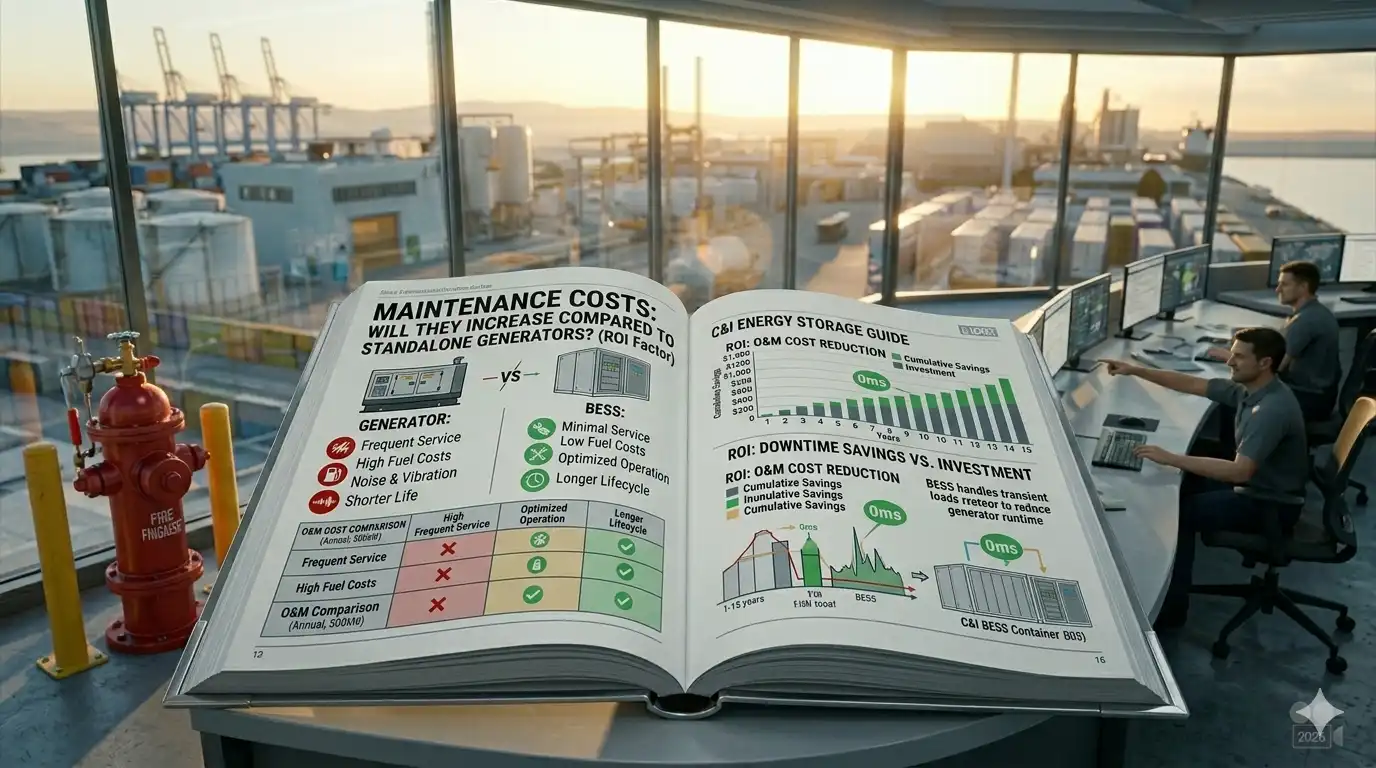
One of the most common concerns for businesses considering a Solar-Storage-Generator Microgrid is maintenance costs: Will adding solar, BESSBESS (Battery Energy Storage System) is a sophisticated technology that captures for Factories, and intelligent controls increase maintenance compared to standalone diesel generators? The answer is no—in fact, APEXUL’s system reduces total maintenance costs by 40–50% compared to standalone generators, thanks toDiesel Generator Optimization and low-maintenance components. In this guide, we compare maintenance costs between APEXUL’s microgrid and standalone generators, explain why costs are lower, and show how this impacts your ROI for Industrial Power Assurance and Weak Grid Energy Solutions.
Standalone diesel generators require frequent, costly maintenance—especially if they run frequently (common in Weak Grid Energy Solutions areas). Key maintenance costs include: Routine Maintenance: Oil changes (every 250–500 hours), filter replacements (air, fuel, oil), and spark plug replacements—costing $500–$1,500 per service. For generators running 3,000+ hours annually (typical in weak grid areas), this translates to 6–12 services per year, totaling $3,000–$18,000.Major Overhauls: Engine rebuilds or component replacements (e.g., turbocharger, injectors) every 5,000–10,000 hours—costing $10,000–$50,000. For a generator running 3,000 hours/year, this means an overhaul every 2–3 years, adding $3,300–$25,000 annually to maintenance costs. Downtime During Maintenance: When the generator is down for maintenance, you need a backup (e.g., rental generator) to maintain Industrial Power Assurance, costing $1,000–$3,000 per day. A single routine service can take 4–8 hours, while an overhaul can take 2–3 days, adding $500–$9,000 per maintenance event. Low-Load Damage Repairs: Standalone generators often run at low load (below 30% capacity), causing carbon deposits, engine wear, and fuel system damage. Repairs for this damage (e.g., injector cleaning, cylinder honing) cost $2,000–$8,000 annually, on average. For a typical industrial generator (100kW) running 3,000 hours/year in a Weak Grid Energy Solutions area, total annual maintenance costs can reach $15,000–$60,000—a significant operational expense that eats into profits.
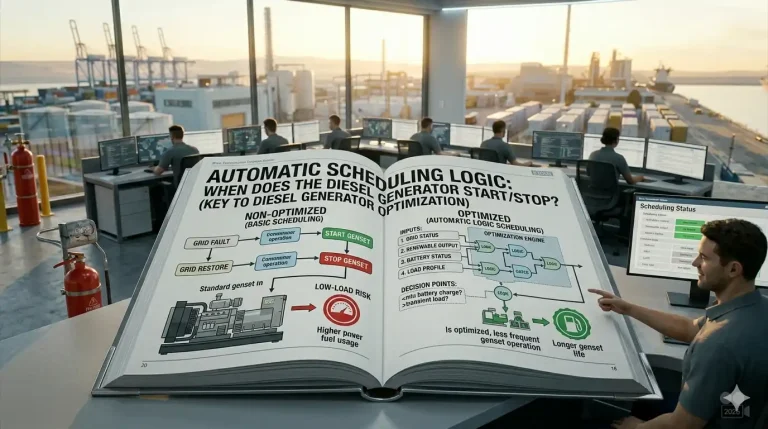
APEXUL’s microgrid reduces maintenance costs by minimizing diesel generator runtime (via Diesel Generator Optimization) and using low-maintenance solar and BESSBESS (Battery Energy Storage System) is a sophisticated technology that captures for factory components. Here’s a breakdown of maintenance costs for the system: Diesel Generator Maintenance: Thanks to Diesel Generator Optimization, the generator runs 30–70% less than standalone units. For a 100kW generator, this reduces runtime to 900–2,100 hours/year, cutting routine services to 2–8 per year ($1,000–$12,000) and extending the time between overhauls to 4–10 years ($1,000–$12,500 annually). Low-load damage is also eliminated, as the generator only runs at optimal load (60–80% capacity) when activated. Solar Panel Maintenance: Solar panels are virtually maintenance-free, requiring only annual cleaning (costing $500–$1,500 per year) to remove dust and debris. They have a 25–30 year lifespan with no major maintenance needed, making them a low-cost component. BESSBESS (Battery Energy Storage System) is a sophisticated technology that captures for Factory Maintenance: The battery energy storage system requires minimal maintenance—monthly monitoring (often automated via the EMS) and annual cell balancing (costing $1,000–$2,000 per year). Modern lithium-ion batteries have a 10–15 year lifespan, with no major overhauls required. Intelligent Controls (EMS) Maintenance: The Energy Management System is software-driven, requiring only annual software updates and system checks (costing $500–$1,000 per year). No physical component replacement is needed for 5–7 years. For the same 100kW system in a Weak Grid Energy Solutions area, total annual maintenance costs for APEXUL’s microgrid are $3,000–$26,500—a 40–50% reduction compared to standalone diesel generators.
A rural manufacturing facility in a Weak Grid Energy Solutions area replaced its standalone 150kW diesel generator with APEXUL’s Solar-Storage-Generator Microgrid. Here’s how maintenance costs changed: Before (Standalone Generator): 4,000 hours/year runtime, annual maintenance costs = $25,000 (routine services: $12,000; overhaul reserve: $10,000; low-load repairs: $3,000). After (APEXULApex Ultimate is a global energy solution provider specializing in BESS, Hybrid Microgrid): Generator runtime reduced to 1,200 hours/year, annual maintenance costs = $10,500 (generator: $6,000; solar: $1,000; BESSBESS (Battery Energy Storage System) is a sophisticated technology that captures: $2,000; EMS: $1,500). Annual Maintenance Savings: $14,500—a 58% reduction. Over 5 years, the facility saved $72,500 in maintenance costs—a significant contribution to the microgrid’s ROI.
The key reasons APEXUL’s system reduces maintenance costs compared to standalone generators are: Diesel Generator Optimization: Less runtime means less wear and tear, fewer services, and extended component lifespans. Low-Maintenance Components: Solar panels and BESSBESS (Battery Energy Storage System) is a sophisticated technology that captures for Factories require far less maintenance than diesel generators, with no frequent oil changes, filter replacements, or engine repairs. Automated Monitoring: The EMS continuously monitors all components, alerting you to potential issues before they become costly repairs—reducing unplanned maintenance costs by 30–40%. No Backup Rental Costs: The microgrid’s redundancy (solar + BESSBESS (Battery Energy Storage System) is a sophisticated technology that captures + generator) means you don’t need a rental generator during maintenance—eliminating $500–$9,000 per maintenance event. Impact on ROI: Maintenance Savings as a Key Factor. Maintenance savings are a critical ROI factor for BESSBESS (Battery Energy Storage System) is a sophisticated technology that captures for Factories and industrial facilities. For example, a microgrid investment of $600,000 with annual maintenance savings of $15,000 and annual downtime/diesel savings of $300,000 will have an ROI period of just 1.9 years—6 months faster than if maintenance savings were not included.
Over the 20-year lifespan of the microgrid, maintenance savings alone can total $300,000–$750,000—making it a key driver of long-term profitability.
APEXULApex Ultimate is a global energy solution provider specializing in BESS, Hybrid offers comprehensive maintenance support to further reduce your costs, including: Remote Monitoring: Our team monitors your microgrid 24/7 via the EMS, identifying and resolving issues remotely before they require on-site repairs. Preventive Maintenance Plans: Customized plans that schedule routine maintenance during low-demand periods, minimizing downtime and reducing costs. Component Warranties: 5–10 year warranties on solar panels, BESSBESS (Battery Energy Storage System) is a sophisticated technology that captures, and generator components—covering repair or replacement costs for unexpected failures. Conclusion: APEXUL’s Solar-Storage-Generator Microgrid does not increase maintenance costs—it reduces them by 40–50% compared to standalone diesel generators, thanks to Diesel Generator Optimization and low-maintenance components. For facilities in Weak Grid Energy Solutions areas, where standalone generator maintenance is costly and frequent, this reduction translates to significant annual savings that boost ROI and improve profitability. With automated monitoring, comprehensive support, and long component lifespans, APEXUL’s microgrid ensures Industrial Power Assurance without the burden of high maintenance costs—making it a smarter, more cost-effective choice for critical industrial operations.
Return to the main guide: Ultimate Guide to Industrial Power Assurance: 0ms Downtime | APEXUL