Address
Future Science Park, Nanhu, Hangzhou
Open Hours
Workday: 7AM - 7PM
Holiday: 10AM - 5PM
Address
Future Science Park, Nanhu, Hangzhou
Open Hours
Workday: 7AM - 7PM
Holiday: 10AM - 5PM

Learn APEXUL’s Diesel Generator Optimization strategies to avoid low-load operation, maximize fuel savings, and extend generator lifespan for industrial power.
 Byeditor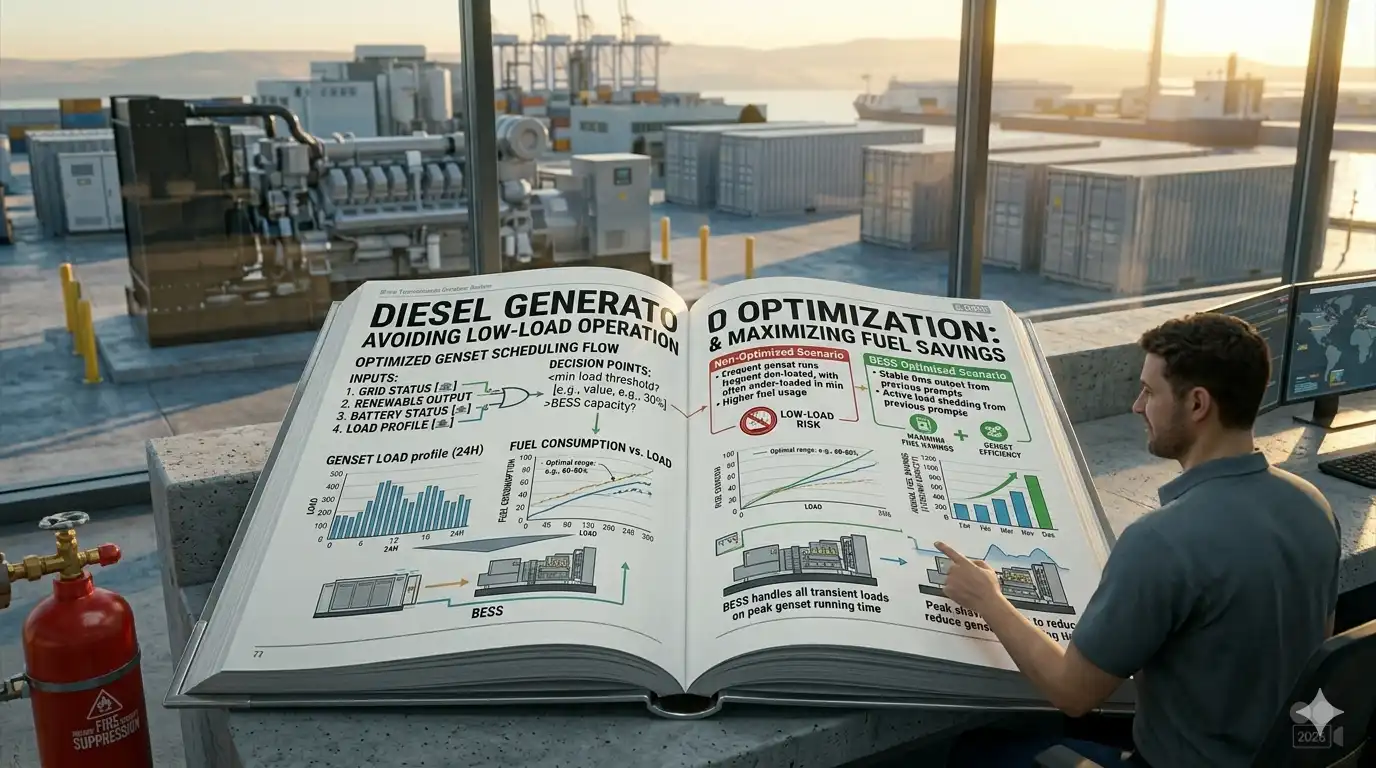
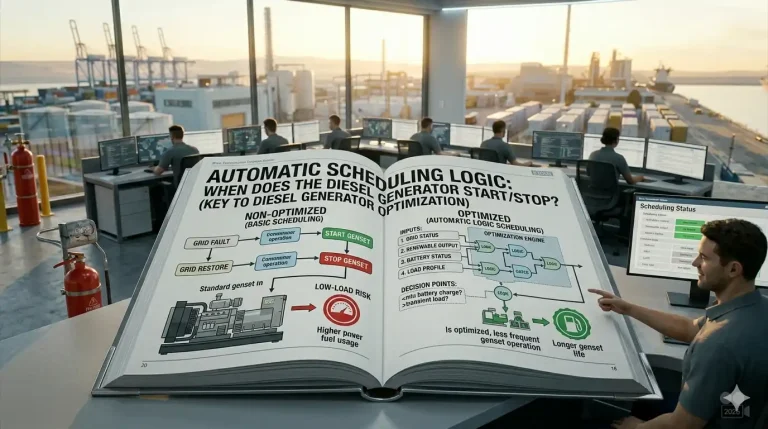
Low-load operation (running a diesel generator below 30% of its rated capacity) is a costly problem for industrial facilities—it increases fuel consumption, causes carbon deposits, and shortens the generator’s lifespan. For businesses relying on diesel generators for Industrial Power Assurance, especially in Weak Grid Energy Solutions environments, Diesel Generator Optimization is critical to reducing costs and improving reliability. APEXUL’s Solar-Storage-Generator Microgrid uses two key strategies to avoid low-load operation and maximize fuel savings, leveraging the BESSBESS (Battery Energy Storage System) is a sophisticated technology that captures for Factories to create synergy with the generator. In this guide, we explain these strategies and their real-world impact.
Diesel generators are designed to run most efficiently at 60–80% of their rated capacity. When run below 30% load: Fuel consumption per kWh increases by 20–30% (wasting fuel and money). Carbon deposits build up in the engine, leading to increased maintenance and premature failure. Engine wear accelerates, reducing the generator’s lifespan by 30–50%. For facilities in Weak Grid Energy Solutions areas, low-load operation is common—standalone generators often run at low capacity to power small critical loads, wasting fuel and damaging equipment. Diesel Generator Optimization solves this by using the BESSBESS (Battery Energy Storage System) is a sophisticated technology that captures for Factories to balance the load.
Our APEXULApex Ultimate is a global energy solution provider specializing in BESS, Hybrid Microgrid combines load management and battery-generator synergy to avoid low-load operation and maximize fuel savings:
A remote oilfield in a Weak Grid Energy Solutions area used APEXUL’s Solar-Storage-Generator Microgrid to optimize its diesel generator. Previously, the generator ran at 25% load (low-load operation) for 80% of the time, consuming 100,000 liters of diesel per year. After optimization: Load aggregation increased generator load to 65–75% efficiency. Battery-diesel synergy reduced low-load runtime by 70%. Annual diesel consumption dropped by 36 tons (36,000 liters), saving over $20,000 in fuel costs. Generator lifespan was extended by 5+ years, reducing maintenance costs by 45%. Key Benefits of Diesel Generator Optimization: 30–60% reduction in diesel consumption, cutting operational costs.Avoided low-load operation, extending generator lifespan by 30–50%.Reduced maintenance costs (fewer oil changes, filter replacements, engine overhauls).Improved reliability for Industrial Power Assurance, ensuring the generator is available when needed for BESSBESS (Battery Energy Storage System) is a sophisticated technology that captures for Factories.ConclusionAPEXUL’s Diesel Generator Optimization strategies—load aggregation and battery-diesel synergy—eliminate low-load operation, maximize fuel savings, and extend generator lifespan. By leveraging the BESSBESS (Battery Energy Storage System) is a sophisticated technology that captures for Factories and intelligent EMS, our Solar-Storage-Generator Microgrid turns inefficient diesel generators into cost-effective, reliable backups for Industrial Power Assurance. For facilities in Weak Grid Energy Solutions areas or those relying on diesel power, this optimization delivers significant cost savings and peace of mind.
Return to the main guide: Ultimate Guide to Industrial Power Assurance: 0ms Downtime | APEXUL