How a Chinese Socket Factory in Phnom Penh Cut Energy Costs by 35% and Eliminated Downtime
A factory in Phnom Penh used solar and bess to cut electricity costs by 35% and eliminate all production downtime from grid outages, securing both savings and operational continuity.
In the Phnom Penh Special Economic Zone of Cambodia, a well-established Chinese-owned socket manufacturing factory was once locked in a silent battle. The adversary wasn’t market competition, but the invisible and intangible “electricity”. What the factory management feared most wasn’t a lack of orders. Still, the sudden voltage alarm flashing on the control screen—signaling another production halt, another batch of material scrapped, another anxious 30-minute wait to restart the line. They used to joke grimly: “We aren’t using electricity; we are enduring it.” Today, this is all history. Below, we will recount in detail, supported by authentic project visuals, how Apex UltimateApex Ultimate is a global energy solution provider specializing in BESS, Hybrid delivered an “active immunity” smart solar-storage system, transforming it from a “cost center” into a “profit-generating asset.”
Table of Contents
I. Client Dilemma: The Dual Stranglehold of Frequent Flickers and Soaring Costs
The factory’s highly automated production line demanded extreme power stability, yet the local grid environment posed severe challenges.
“Heart Attack” Production Pains: Frequent grid “flickers” (brief voltage sags or interruptions) plagued the area, with the worst days seeing up to 10 occurrences. Each event was like a “heart attack” for the production line:
Precision Injection Molding Machines Jamming: Causing semi-finished products in molds to solidify and scrap instantly, requiring time-consuming cleanup and restart.
Smart Assembly Line Paralysis: Robotic arms are losing position, necessitating full-line recalibration.
Quality Control Failure: Sensitive instruments like withstand voltage testers are losing data, breaking the quality traceability chain.
Comprehensive impact: Each unplanned downtime resulted in an average of 30 minutes of direct and indirect productivity loss.
“Bleeding” Profit Erosion: Cambodia’s high and continuously rising electricity prices made power costs the largest expense after raw materials, relentlessly eroding profit margins.
Complete Failure of Traditional Solutions:The backup diesel generator, with its slow response time (several seconds to tens of seconds), was utterly useless against “millisecond-level” flickers. It was only viable for prolonged outages, accompanied by noise, pollution, and high fuel costs.
Core Diagnosis: The problem wasn’t a “lack of power” but extreme instability in power quality and uncontrollable energy costs. The solution required both “neuro-reflex” speed and “meticulous” operational intelligence.
II. The Solution: An “Active Immunity” Smart Solar-Storage System
We did not provide a simple stack of equipment but delivered a deeply integrated, predictive, and self-adjusting factory-level energy immune system. Its core lies in “Active Defense” and “Intelligent Optimization”.
System Core: A Tripartite Synergy
Rooftop PV Array (The Producer): Utilizing tens of thousands of square meters of prime factory roof space, a 3 MWp photovoltaic plant was built, serving as the primary clean power source and cost hedge during the day.
Intelligent Hybrid Energy Manager (The Brain):Using high-speed algorithms, it dispatches energy flow between solar, storage, and the grid in real-time, executing millisecond-level switching and optimal economic strategies.
Conquering “Frequent Flickers”: From Passive Endurance to Active Immunity Traditional solutions react passively after a fault occurs. Our system seamlessly takes over before the fault impacts production.
Seamless Millisecond Switching (<20ms): The moment the management system detects any anomaly in grid voltage, a command is issued instantaneously. The storage system immediately switches from “standby” to “full-load output,” powering all critical production loads. For precision equipment on the line, the power supply curve remains smooth, eliminating emergency stops caused by voltage sags.
24/7 Active Voltage Support: Even with normal grid conditions, the storage system remains online, acting like a giant “electronic voltage stabilizer” that actively absorbs or supplements minor fluctuations, creating an unprecedented high-quality internal power environment for the factory.
Solving “High Costs”: From Pure Consumption to Intelligent Gain The system’s “brain” continuously calculates the optimal economic model, operating automatically:
Solar Priority, Maximize Self-Consumption: During daytime hours, the factory prioritizes consuming self-generated solar energy, drastically reducing the need to purchase expensive grid power.
Demand Control, Avoid Penalties: Accurately predicts and controls the factory’s peak power draw from the grid, avoiding hefty demand charge penalties.
III. Implementation Journey: Professional Delivery Behind Eight Key Photos
The project’s success relied not only on excellent design but also on precise, reliable engineering execution. These key milestones document our process of turning blueprints into reality:
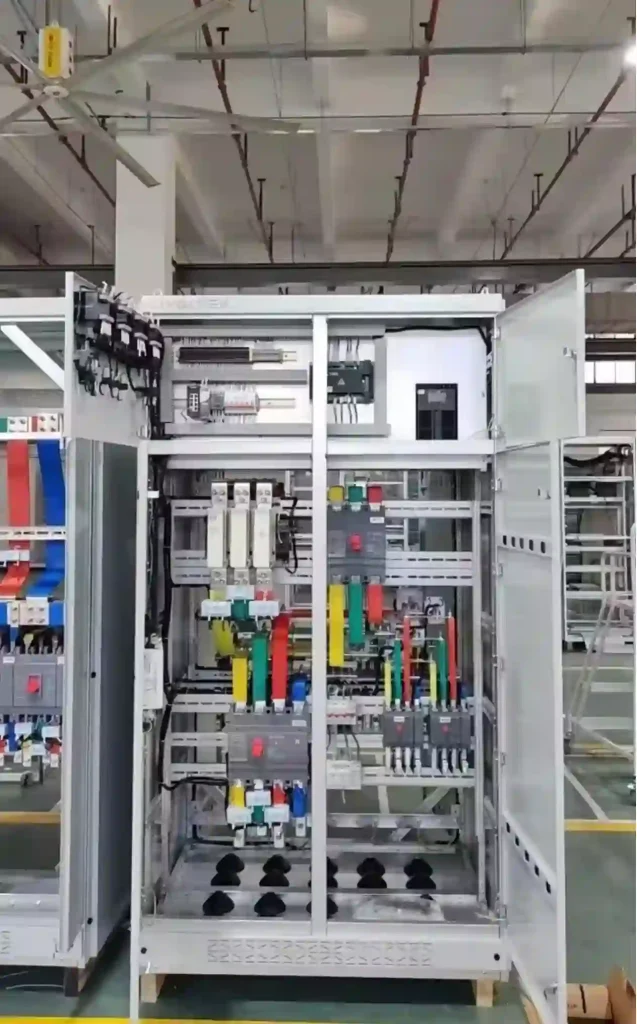
Lean Preparation, Strict Source Control: All core equipment underwent rigorous integration testing and pre-commissioning before leaving the factory, ensuring optimal conditions for shipment.
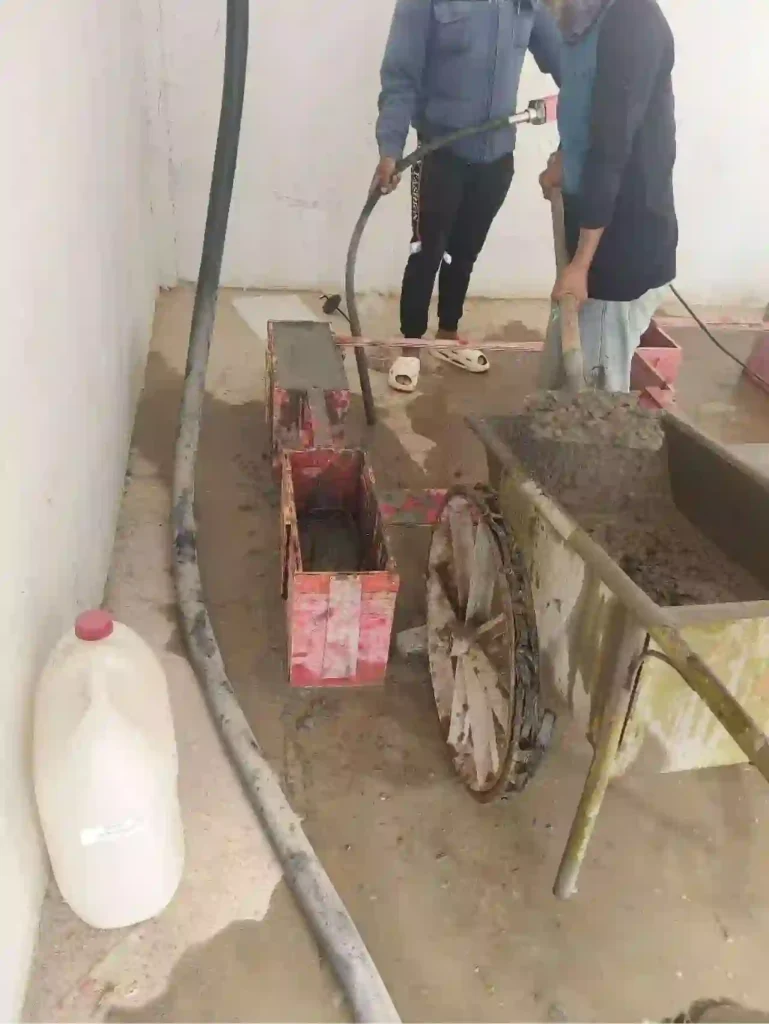
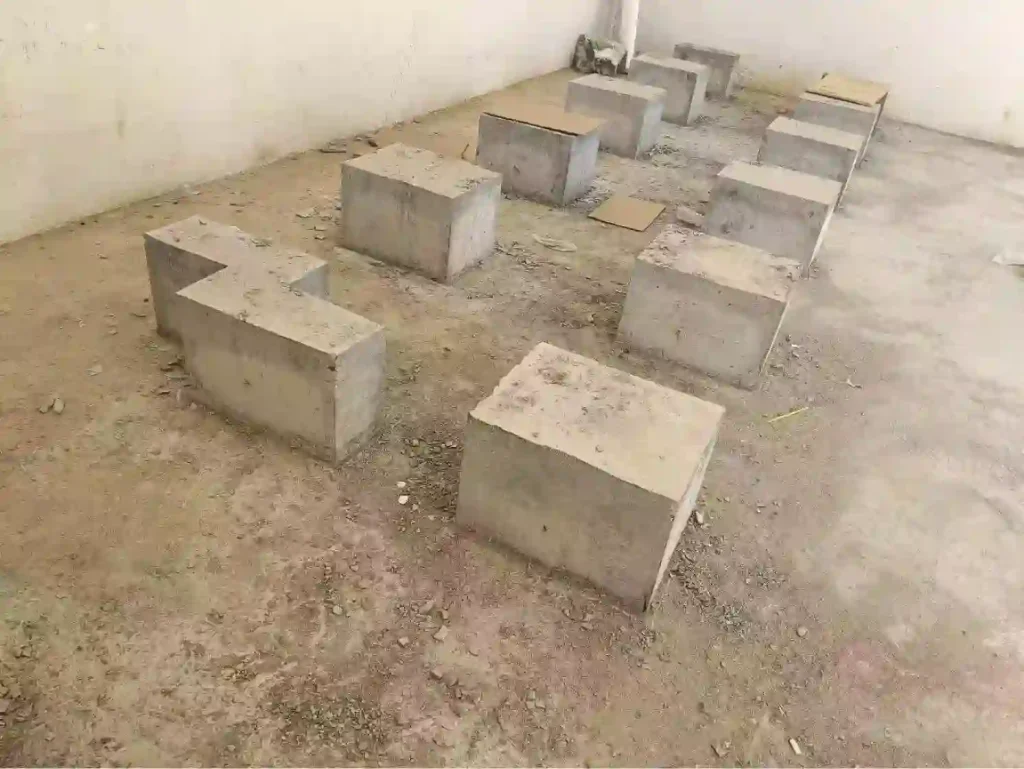
Rooted On-Site, Foundation First: A robust foundation was specifically designed for the local soil conditions, ensuring long-term stable operation for the heavy equipment.
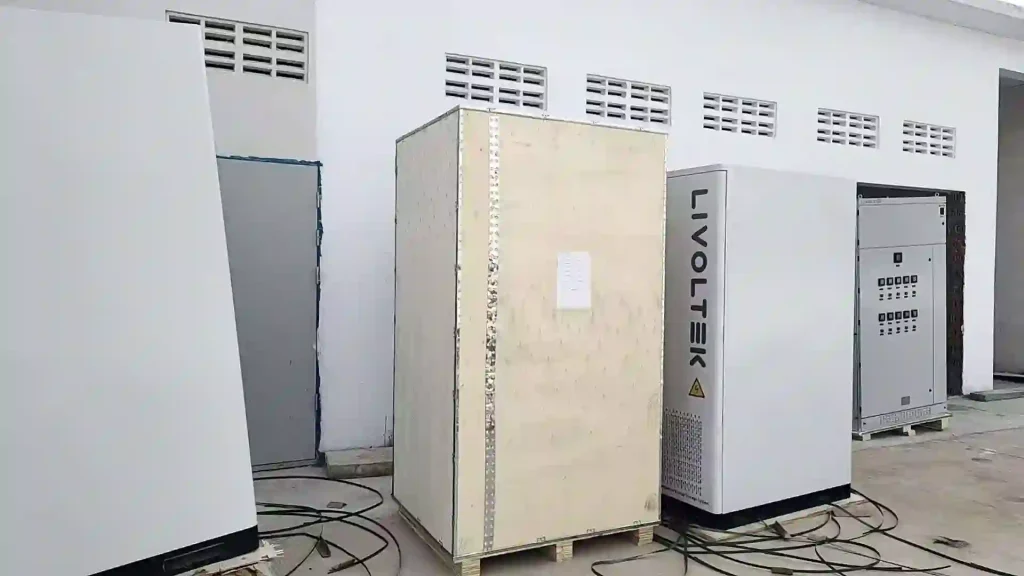
Crossing Seas, Precise Arrival: Through meticulous international logistics planning, large containers arrived safely on-site, moving the project into the implementation phase.
Safe Lifting, Perfect Fit: Precise placement of large equipment like storage cabinets and inverters was completed within the factory’s limited space.
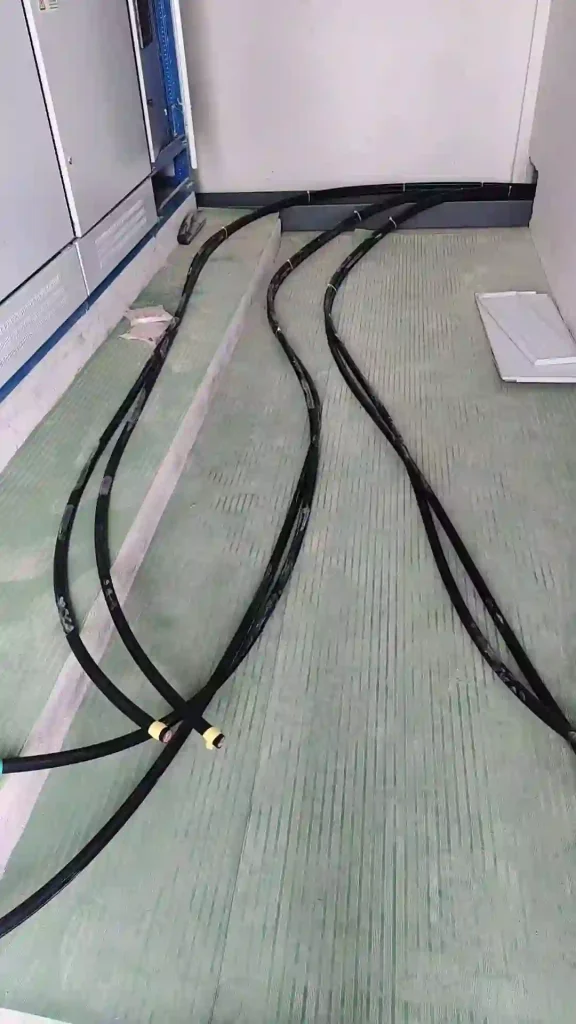
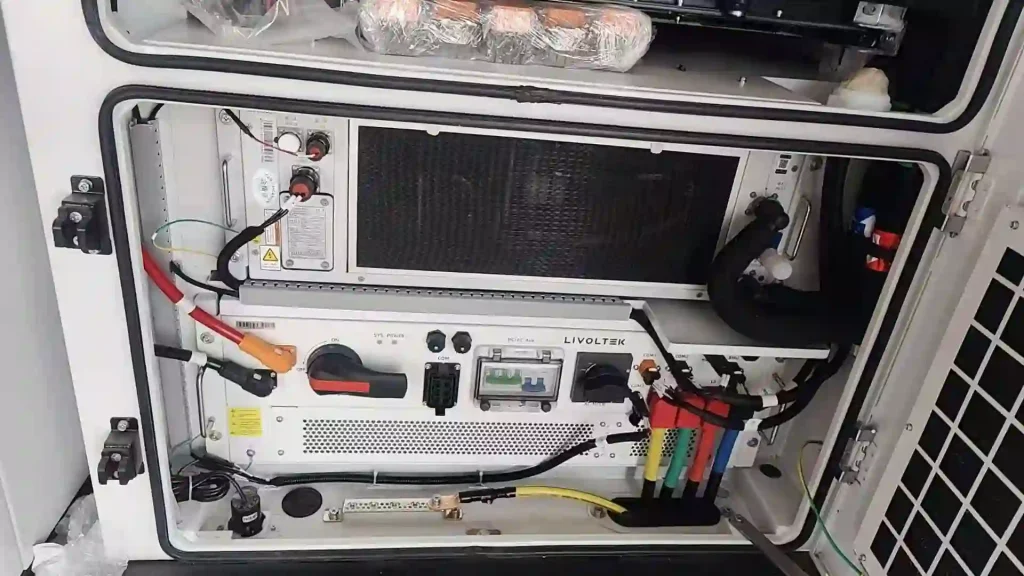
Standardized Wiring, Neural Connection: Engineers followed the highest standards for cable laying and termination, ensuring safe, efficient, and neat transmission of energy and data flows.
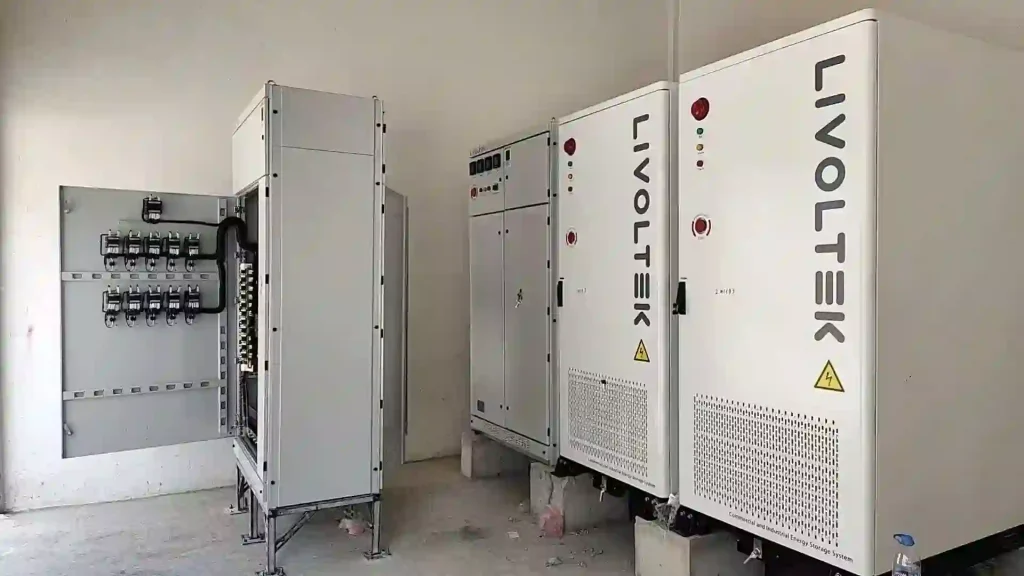
System Takes Shape: All equipment modules were laid out logically with clear access, facilitating future debugging and maintenance.
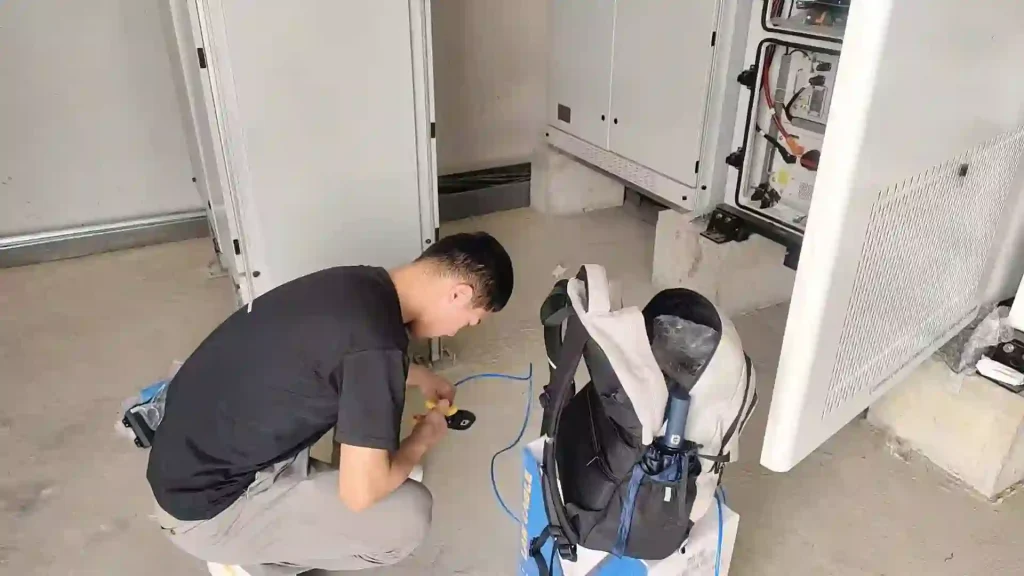
Infusing Intelligence, Bringing to Life: Through injecting control strategies, debugging system logic, and simulating various operational scenarios, the inert equipment was ultimately “brought to life” into an intelligent, synergistic whole.
IV. Delivery Results: Quantifiable Transformation from “Cost Center” to “Profit-Generating Asset”
System operation brought immediate and sustainable value returns:
Production Reliability Revolution:
Frequent flickers were reduced to zero. The production line achieved over 100 days of continuous stable operation with no unplanned downtime due to power issues.
Equipment failure rates (especially for motors and controllers) dropped significantly, reducing maintenance costs. Production planning became predictable and executable.
Significant Economic Benefits:
Total electricity costs dropped by 35%. “Solar self-consumption” led to a substantial reduction in monthly bills.
Clear Asset ROI: Rigorous calculation shows the project’s total investment payback period is approximately 3.8 years. Given the system’s core equipment design life exceeds 15 years, it will continue generating “electricity profit” for over a decade post-payback, becoming a genuine productive asset.
Enhanced Management & Social Value:
Energy Visualization, Control, Optimization: Management can monitor real-time power generation, consumption, and storage via a platform, enabling refined energy management.
Boosted Green Competitiveness: The project significantly increased the factory’s green energy ratio, strongly supporting its ESG (Environmental, Social, Governance) performance and enhancing its brand image and competitive edge within international supply chains.
V. Project Insights: A Replicable Success Model
This case’s success is not accidental; it validates a replicable path:
Precise Diagnosis Over Blind Action: Success stemmed first from deep insight, accurately identifying the problems as “millisecond-level power quality management” and “full-cycle energy cost optimization,” rather than a vague “power shortage.”
Systems Thinking Over Equipment Stacking: Designing PV, storage, and intelligent control as an organic whole achieved the synergistic goals of stability, economy, and sustainability, creating a “1+1+1>3” systemic benefit.
Professional Delivery Ensures Value Realization: Professional execution at every stage—from international logistics and localized construction to software debugging—was fundamental to transforming plans into reliable productivity. We delivered not a pile of equipment, but an immediately usable production environment free from power worries.
Crucially, this project served as a profound tempering of our team’s overseas delivery capabilities. Facing a series of expected and unexpected challenges—weak local grid infrastructure, complex power environments, and limited on-site conditions—our project team demonstrated exceptional professional resilience and problem-solving skills. From adapting equipment for special conditions and overcoming on-site construction difficulties to final debugging in a complex grid environment, every step was challenging. We ultimately lived up to the client’s trust, completing system delivery and grid connection. The client’s relief and recognition upon system operation, which solved their long-standing core pain points, is our highest accolade.
This experience has provided us with invaluable overseas practical delivery experience that goes beyond theoretical solutions. We understand that an excellent solution lies not only in advanced technical specifications on paper but in its ability to take root and flourish in different markets and environments. The success of the Phnom Penh project is a complete embodiment of this capability.
Actionable Insights for Your Operations
Does your factory in emerging markets across Southeast Asia, Africa, or Latin America also suffer from similar plagues of frequent outages, unstable voltage, and crippling electricity costs? The real-world story from Phnom Penh has already validated the solution’s effectiveness and our team’s ability to execute in complex environments.
Apex UltimateApex Ultimate is a global energy solution provider specializing in BESS, Hybrid provides not just technology, but a full-cycle partnership from diagnosis and planning to delivery and operational support. Let us transform your factory into the next benchmark for energy independence and cost leadership.

 Byadmin