Address
Future Science Park, Nanhu, Hangzhou
Open Hours
Workday: 7AM - 7PM
Holiday: 10AM - 5PM
Address
Future Science Park, Nanhu, Hangzhou
Open Hours
Workday: 7AM - 7PM
Holiday: 10AM - 5PM

Power outage Phnom Penh costs manufacturers over $25,000 per event. A microgrid provides millisecond protection and reduces electricity bills, turning grid instability into a competitive advantage.
 Byeditor
In Phnom Penh, scheduled power outages are a recurring reality, with the state utility EDC cutting electricity for up to nine hours a day to move poles or maintain infrastructure. But for manufacturers, the far greater threat is the unplanned flicker—the millisecond voltage sag that crashes a production line, scraps materials, and burns through profits. This article explores the true cost of power instability in Cambodia’s capital and presents a proven solution: the PV-storage-diesel microgrid.
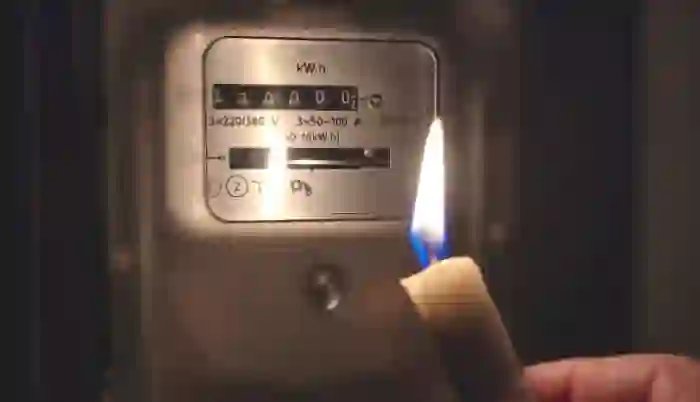
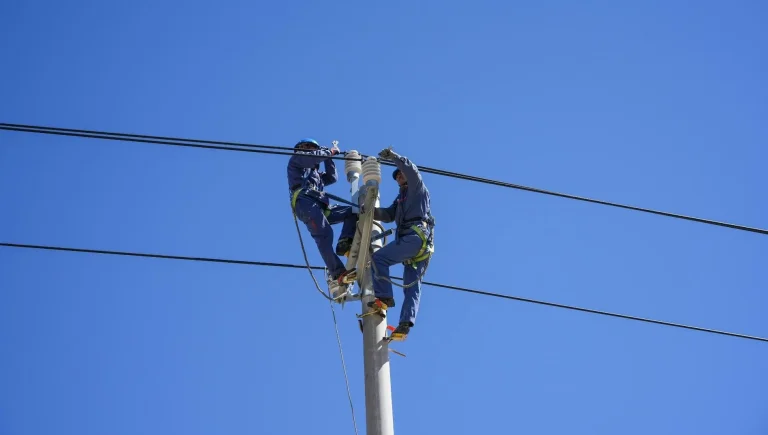
In early 2026, residents in parts of Phnom Penh’s Meanchey, Dangkor, and Por Sen Chey districts received their notices: power would be out from 8 a.m. to 5 p.m. to allow Electricite du Cambodge (EDC) to relocate poles for road widening. These scheduled disruptions, while inconvenient, are at least predictable.
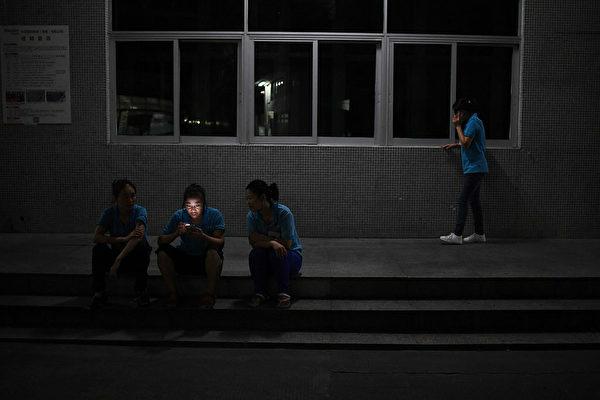
The real crisis for businesses lies in what happens between these planned outages. It’s the momentary dip when a heavy machine starts up elsewhere on the grid. The split-second sag when grid infrastructure struggles to balance load. The brief interruption that, while barely dimming a lightbulb, acts as a wrecking ball for modern manufacturing.
According to the World Bank’s Enterprise Surveys 2023, a staggering 43 percent of Cambodian firms experience electricity outages—far higher than Malaysia’s 28.6 percent and Indonesia’s 12.7 percent. These aren’t just inconveniences. They are a direct drag on the economy, with costs associated with outages now reaching 1.1 percent of annual sales for affected companies, up from just 0.3 percent in previous surveys.
This is the story of that 1.1 percent—and how businesses in Phnom Penh are fighting back.
To understand the solution, we must first understand the problem. Power instability in Cambodia stems from a unique combination of factors.
1. Infrastructure Under Pressure
Cambodia’s electricity grid has expanded at an incredible pace. From only 6.6 percent of Cambodians having access to power in 2000, that figure soared to 97.5 percent by 2021. This rapid expansion is a testament to the country’s development, but it also means that grid infrastructure—transformers, substations, and distribution lines—is often operating at the edge of its capacity.
2. The Dry Season Dilemma
Much of Cambodia’s domestic power generation comes from hydropower. In 2024, the country’s total installed capacity reached 5,044 MW, with 1,796 MW coming from hydro. During the dry season, when water levels drop and hydro plants cannot operate at full capacity, the national grid faces stability issues. This forces increased reliance on imported power from Thailand, Vietnam, and Laos (672 MW in 2024) and on expensive diesel fuel.
3. The High Cost of Instability
Cambodia already suffers from some of the highest electricity prices in the region due to a shortage of integrated high-voltage transmission systems and the cost of imported fuel. When instability strikes, the costs multiply. A single voltage fluctuation can crash a CNC machine, ruin a batch of precision parts, or force a full production line restart that takes hours.
One industrial operator in Vietnam—a neighbor facing similar grid challenges—estimated that each 10-to-15-minute production stoppage caused by voltage fluctuations cost over $25,000 in lost output and damaged equipment. For Phnom Penh manufacturers operating on thin margins, these losses are existential.
When faced with grid instability, the instinctive response is to buy a diesel generator. But generators have a fatal flaw: they cannot react quickly enough.
The Generator Gap
A voltage sag lasts for milliseconds. A standard diesel generator, even a high-quality one, takes seconds to detect the drop, start up, and stabilize its output. By the time the generator kicks in, the damage is already done—contactors have dropped, motors have stalled, and production has stopped.
The UPS Problem
Uninterruptible Power Supplies (UPS) can bridge the millisecond gap, but they are designed for short-duration backup—typically minutes at most. They cannot sustain a factory through a multi-hour outage, and they certainly cannot offset the crippling cost of peak electricity rates.
What Phnom Penh’s businesses need is not a single piece of equipment, but a system—one that can respond in milliseconds, sustain for hours, and actually pay for itself over time.
In June 2025, a milestone was reached in Cambodia’s energy landscape. Huawei Digital Power, in collaboration with local energy leader SchneiTec, commissioned the country’s first TÜV SÜD-certified grid-forming energy storage project in Phnom Penh.
What is Grid-Forming Storage?
Traditional “grid-following” storage systems are passive. They wait for the grid to provide a stable voltage and frequency reference, then follow along. When the grid falters, they falter.
Grid-forming storage is different. It acts as an “intelligent voltage source,” actively establishing voltage and frequency for the local network. When the grid dips, the grid-forming system can instantaneously inject power to stabilize it. In the most extreme scenario—a complete blackout—it can execute a “black start,” re-energizing the local grid without any external support.
The test results were remarkable:
For a factory in Phnom Penh, this translates to one simple reality: the lights stay on, and the machines keep running.
While cutting-edge grid-forming technology is the engine, Apex Ultimate provides the complete vehicle. We specialize in PV-Storage-Diesel hybrid microgrids that are tailored to the unique needs of businesses in emerging markets like Cambodia.
Our approach integrates three core elements into a seamless, intelligent system:
1. Solar PV (The Cost-Cutter)
Installed on factory rooftops, solar panels generate free electricity during daylight hours, directly offsetting the high cost of grid power. With Cambodia’s abundant sunshine, this is the most direct way to reduce monthly electricity bills.
2. Grid-Forming Energy Storage (The Protector)
This is the heart of the system. Our battery energy storage systems (BESS) are engineered to provide millisecond-level response to grid fluctuations. When a voltage sag hits, the BESS seamlessly disconnects from the unstable grid and instantly supplies power to critical loads—all within 20 milliseconds, far faster than any generator can react. And when the grid is stable, the BESS performs “peak shaving,” charging when electricity is cheap and discharging when prices spike.
3. Diesel Generation (The Ultimate Backup)
For extended grid failures or during construction phases, a diesel generator provides unlimited backup. Crucially, our intelligent energy management system (EMS) ensures the generator is used as little as possible—only when solar and battery reserves are exhausted—minimizing fuel costs and maintenance.
Why This Matters for Phnom Penh Businesses
Real-World Proof
In a project adjacent to Cambodia—a socket factory in Phnom Penh—Apex Ultimate’s solution delivered a 35% reduction in electricity costs and completely eliminated production stoppages caused by grid instability. The system paid for itself in less than four years and continues to generate savings.
The World Bank estimates that inadequate electricity supply increases costs, disrupts production, and reduces profitability for Cambodian firms. But the reverse is also true: reliable, optimized power is a source of competitive advantage.
Consider the case of IBIS Rice, a company that set up in the WorldBridge i4.0 SME Cluster specifically because “some of our high-end equipment needs uninterrupted power supply”. For cashew processors, reliable power could enable them to keep 90 percent of raw cashews in Cambodia for local processing, rather than exporting them to Vietnam.
This is the opportunity that Apex Ultimate’s solutions unlock. By investing in a PV-storage-diesel microgrid, a business transforms its energy system from a source of risk into a source of stability, savings, and strategic differentiation.
The Financial Reality
While the upfront investment in a microgrid is significant, the returns are compelling:
Moreover, with Cambodia aiming to increase renewable energy’s share of its energy mix to 70 percent by 2030 and actively encouraging rooftop solar installations (with a 2025 quota of 30 MW), businesses that invest now are positioning themselves ahead of regulatory curves and future carbon requirements.
The data is clear: power outages and voltage instability are a major hurdle for Cambodian businesses. The costs—direct losses, disrupted production, damaged equipment—are real and growing. But the technology to overcome this hurdle exists and is being deployed today.
From the grid-forming breakthroughs validated in Phnom Penh to the practical, factory-tested solutions delivered by Apex Ultimate, the path forward is illuminated.
For the factory manager in Por Sen Chey tired of unexpected shutdowns, for the manufacturer in Meanchey watching profits disappear into diesel fumes, and for the entrepreneur in Takhmao dreaming of scaling production: the solution is here.
Stop coping with the grid. Start mastering your energy.
The choice is yours: remain vulnerable to every flicker, or build a power system that works for you, 24/7, 365 days a year.
Is your Phnom Penh business ready to eliminate costly power outages?
Contact Apex Ultimate today for a free, no-obligation consultation. Our energy experts will analyze your current electricity costs, assess your site’s potential, and provide a customized feasibility report outlining your path to energy independence.
[Contact Us Now] to schedule your assessment and discover how much your business could save.