Address
Future Science Park, Nanhu, Hangzhou
Open Hours
Workday: 7AM - 7PM
Holiday: 10AM - 5PM
Address
Future Science Park, Nanhu, Hangzhou
Open Hours
Workday: 7AM - 7PM
Holiday: 10AM - 5PM

This article explains how backup power systems switch during outages and compares UPS, diesel generators, and energy storage systems in real industrial and commercial scenarios. It helps facility owners understand response speed, reliability, and practical use cases to choose the right backup power strategy.
 Byeditor
For industrial and commercial facilities, power outages are not just blackouts—they can interrupt production, damage equipment, compromise safety, and cause financial losses. While many factories invest in backup power, fewer fully understand how backup systems actually switch during a power failure.
| System | Switching Speed | Backup Duration | Power Quality | Typical Role |
|---|---|---|---|---|
| UPSEssential Power Protection for Critical Industrial Infrastructure Definition A U | Instant | Short | Very High | Protect critical loads |
| Diesel Generator | Delayed (startup required) | Long | Variable | Long-duration emergency backup |
| Energy Storage System | Fast (design-dependent) | Medium to Long | High | Flexible backup & grid support |
No single backup power system can meet all industrial needs. The key is understanding how different systems switch — and how they work together.
Backup power switching logic determines:
Understanding this logic is critical when choosing between UPSEssential Power Protection for Critical Industrial Infrastructure Definition A U systems, diesel generators, energy storage systems (ESS), or hybrid solutions.
Backup power switching logic refers to the sequence and timing by which a facility transitions from grid power to an alternative power source when a disturbance or outage occurs.
Key elements include:
Different backup solutions follow fundamentally different switching principles.
A UPSEssential Power Protection for Critical Industrial Infrastructure Definition A U (Uninterruptible Power SupplyEssential Power Protection for Critical Industrial Infrastructure Definition A U) is designed to respond immediately to power interruptions. When a grid disturbance is detected, the UPSEssential Power Protection for Critical Industrial Infrastructure Definition A U supplies power from its internal energy storage without any noticeable delay.
In most industrial applications, the UPSEssential Power Protection for Critical Industrial Infrastructure Definition A U:
UPSEssential Power Protection for Critical Industrial Infrastructure Definition A U systems are typically used for:
UPSEssential Power Protection for Critical Industrial Infrastructure Definition A U systems are best viewed as instant protection, not long-term backup solutions.
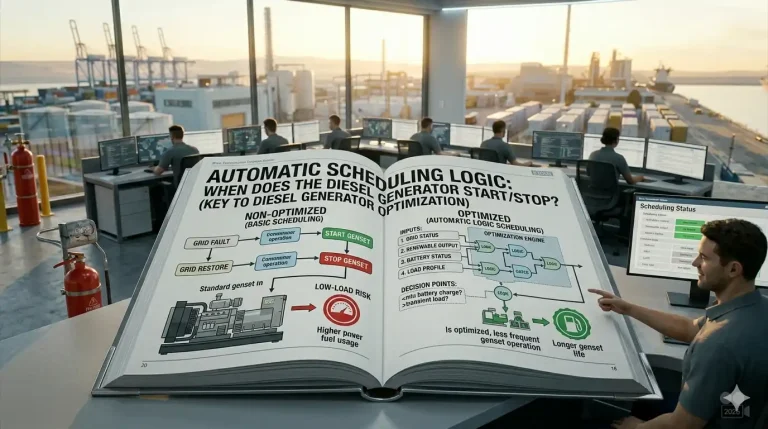
Diesel generators do not supply power instantly. When the grid fails:
This process introduces a time gap, during which power is unavailable unless another system bridges the transition.
Diesel generators are commonly used for:
Because of the startup delay, diesel generators alone cannot protect sensitive loads from short interruptions.
Battery energy storage systems can respond rapidly to grid outages, depending on system design and control architecture. In many cases, ESS can:
When integrated properly, energy storage can operate as:
Energy storage systems are increasingly used to:
Performance metrics such as response time and backup duration are project-specific.
Data source: system design and site operating conditions.
| Aspect | UPSEssential Power Protection for Critical Industrial Infrastructure Definition A U | Diesel Generator | Energy Storage System |
|---|---|---|---|
| Switching speed | Instant | Delayed | Fast (design-dependent) |
| Backup duration | Short | Long | Medium to long (design-dependent) |
| Power quality | Very high | Variable | High |
| Suitable for critical loads | Yes | Limited | Yes |
| Cost optimization | No | No | Yes (in hybrid systems) |
| Integration flexibility | Limited | Moderate | High |
Performance characteristics vary by configuration.
Data source: project-specific engineering design.
In real-world industrial facilities, no single backup system is sufficient on its own.
A common and effective architecture is:
This layered approach:
Backup power switching logic directly affects operational continuity, equipment safety, and production reliability. Understanding how UPSEssential Power Protection for Critical Industrial Infrastructure Definition A U systems, diesel generators, and energy storage systems behave during power transitions allows industrial and commercial users to design more resilient power infrastructures.
Rather than choosing between systems, many facilities now focus on how to integrate them effectively—ensuring instant response, stable operation, and long-term backup capability.
If specific response times, backup durations, or economic impacts are required, they must be evaluated on a project-by-project basis.
Data source: site assessment and system engineering analysis.Knowledge